
members only
Can the subaltern speak?

🇺🇸 English | 🇵🇱 Przeczytaj po polsku
„White Masks, Black Void: Frantz Fanon, Subaltern Studies, and the Decolonization of the Big Other”
Inception of the Question: Can the Subaltern Speak?
My stepping onto the American academic stage at the turn of the millennium at New College of California was not an invitation to replicate the classic Parisian burlesque. The air of San Francisco carried the thick smoke of intellectual insurrection. It was there, and later within the operational matrix of New College of California and later Lutecium-US, that we collided the Lacanian theory of the drive with the paralyzing question posed by Gayatri Chakravorty Spivak: “Can the Subaltern Speak?”
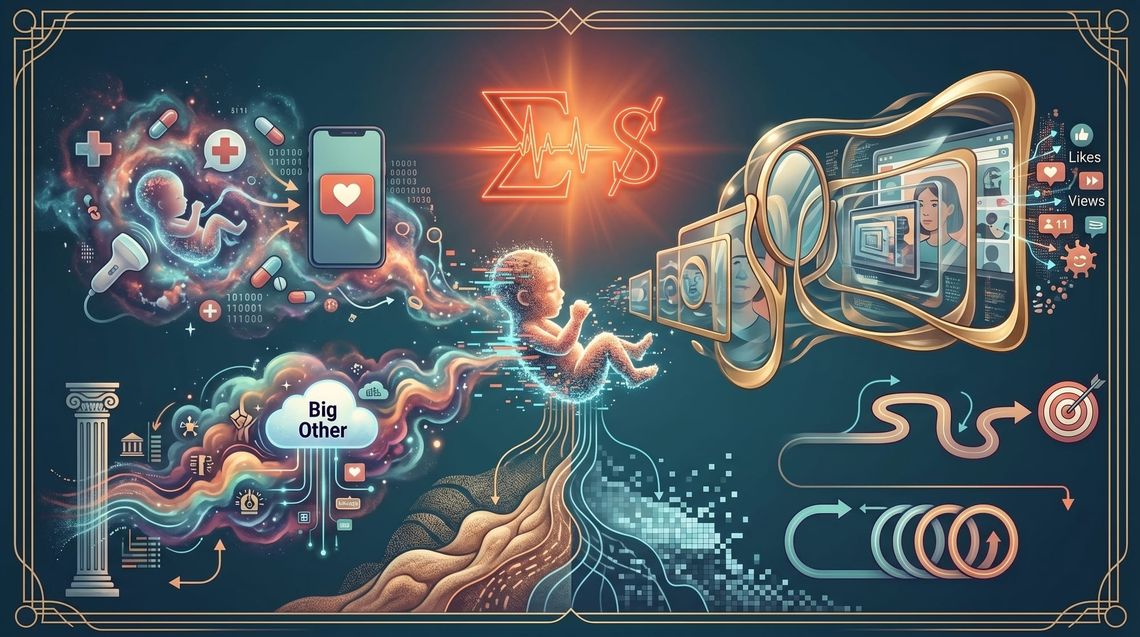
In traditional Anglo-American discourse, psychoanalysis was (and still is) frequently dismissed as a bourgeois, Western playground engineered for the comfort of a normalized, metropolitan ego. However, under the clinical lens of the Feminist-Clinical track at New College and at Lutecium-US workshops and cartels, led the time by Dr. Rebecca Bauknight, the university discourse (S_2/S_1) was subjected to a ruthless deconstruction. We recognized that the Subaltern—the subject systemically excluded, silenced, and cast out to the absolute margins of the social order—does not suffer from a simple, private family neurosis. Their suffering is the direct consequence of a radical Foreclosure of their native signifiers from the central matrix of the Big Other (A). The subaltern cannot speak because the dominant language available to them belongs entirely to the Master (S_1). Every word they utter is a forced loan from the Master's treasury.
Frantz Fanon and the Anatomy of the Purloined Identity
Across this structural grid cuts the clinical and revolutionary work of Frantz Fanon. Fanon—a psychiatrist from Martinique, a student of François Tosquelles at Saint-Alban, and a frontline clinician during the Algerian War of Independence—executed an operation on the couch that permanently altered the geography of madness. His foundational text, “Black Skin, White Masks” (Peau noire, masques blancs, 1952), stands as an unvarnished, pre-Lacanian critique of the Mirror Stage (Le Stade du Miroir) mapped onto the devastating Real of systemic racism.
What happens when a black child or a colonized subject stands before the mirror of the Big Other? The mirror of Western culture does not yield the illusion of a coherent, triumphant Ideal-Ego. Instead, the Master’s mirror articulates a structural assault: “You are a lack, you are an anomaly, you are a fixed-gear aberrant.” To survive this gaze, the subject is forced into a violent, Imaginary identification with an alien image—they put on a White Mask.
From a structural perspective, this is Alienation squared. The subject is not merely split by entering language ($); they are secondary-split by the colonial Master's Discourse. Fanon terms this the “zone of non-being” (zone de non-être)—a black, sterylny Void where the subaltern's biological body is broken into pieces (le corps morcelé) by the scopic gaze of the white observer. Fanon writes of a paralyzing corporeal dread, a psychosomatic spasm born of terror—the exact same panic that freezes a young guy on his knees before the piercing, stony gaze of an absolute judge.
Decolonizing the Sinthome: From Foreclosure to the Seven of Swords Heist
Subaltern studies, when synthesized with the structural maturity of the clinic, provide the blueprint for escaping this box. Traditional, academic paramedicine attempts to "cure" the subaltern by offering a more benevolent, highly inclusive white mask, demands assimilation into corporate metrics, regulatory audits, and sanitizing un-Real compromises.
Fanon and Lacan deliver a unified refusal: it is impossible. True liberation requires the raw engagement with the Real of structural violence and a clean analytical cut. In “The Wretched of the Earth” (Les Damnés de la terre, 1961), Fanon demonstrates that decolonization is never a polite negotiation—it is a violent, cathartic re-ordering of the structure where the colonized subject discards the law of the Big Other and authorizes themselves.
In the lexicon of Theater Doppelganger, this is The Seven of Swords Heist. The subaltern subject stops begging for recognition, brotherhood, or friendship from the judges on Olympus. They kneel not to submit, but to steal back the linguistic steel of their own history, cutting the invisible tethers of the panopticon to depart on the automatic transport vehicle of their own sovereign Sinthome—far beyond the perimeter of the Master's parameters.
BIBLIOGRAPHY AND FURTHER READING
- Fanon, Frantz. Peau noire, masques blancs [Black Skin, White Masks]. Paris: Éditions du Seuil, 1952.(The definitive study of psychic alienation, the mirror stage, and the psychosomatic wounds inflicted by the colonial scopic gaze).
- Fanon, Frantz. Les Damnés de la terre [The Wretched of the Earth]. Paris: François Maspero, 1961.(The manual for the radical Pass of the subaltern subject, defining decolonization as a structural cut).
- Lacan, Jacques. Le Séminaire, Livre XVII: L'envers de la psychanalyse [The Other Side of Psychoanalysis]. Paris: Éditions du Seuil, 1991.(The primary seminar defining the Four Discourses, crucial for unmasking the operations of the Master and the University).
- Spivak, Gayatri Chakravorty. Can the Subaltern Speak? Wedel: Patrick Williams and Laura Chrisman, 1988.(The foundational text for subaltern studies, dismantling Western claims to the representation of the foreclosed subject).
- Guha, Ranajit. Selected Subaltern Studies. New York: Oxford University Press, 1988.(The historical and methodological framework showing how the Big Other of colonial archives systemically erases the trace of the oppressed).
- Bhabha, Homi K. The Location of Culture. London: Routledge, 1994.(A brilliant convergence of Lacanian masquerade, mimicry, and Imaginary hybridity within post-colonial spaces).
Written by
Subscribe for FREE to our Audience
Enter your email to access commenting, receive memos, logs, dispatches, and unfiltered fragments directly from the Theater.











Member discussion