Dlaczego piszemy?

ENG Version: Why do we write?
Sometimes we wonder what blogging really is.
Maybe it is nothing new.
Maybe we are doing exactly what people have been doing for thousands of years.
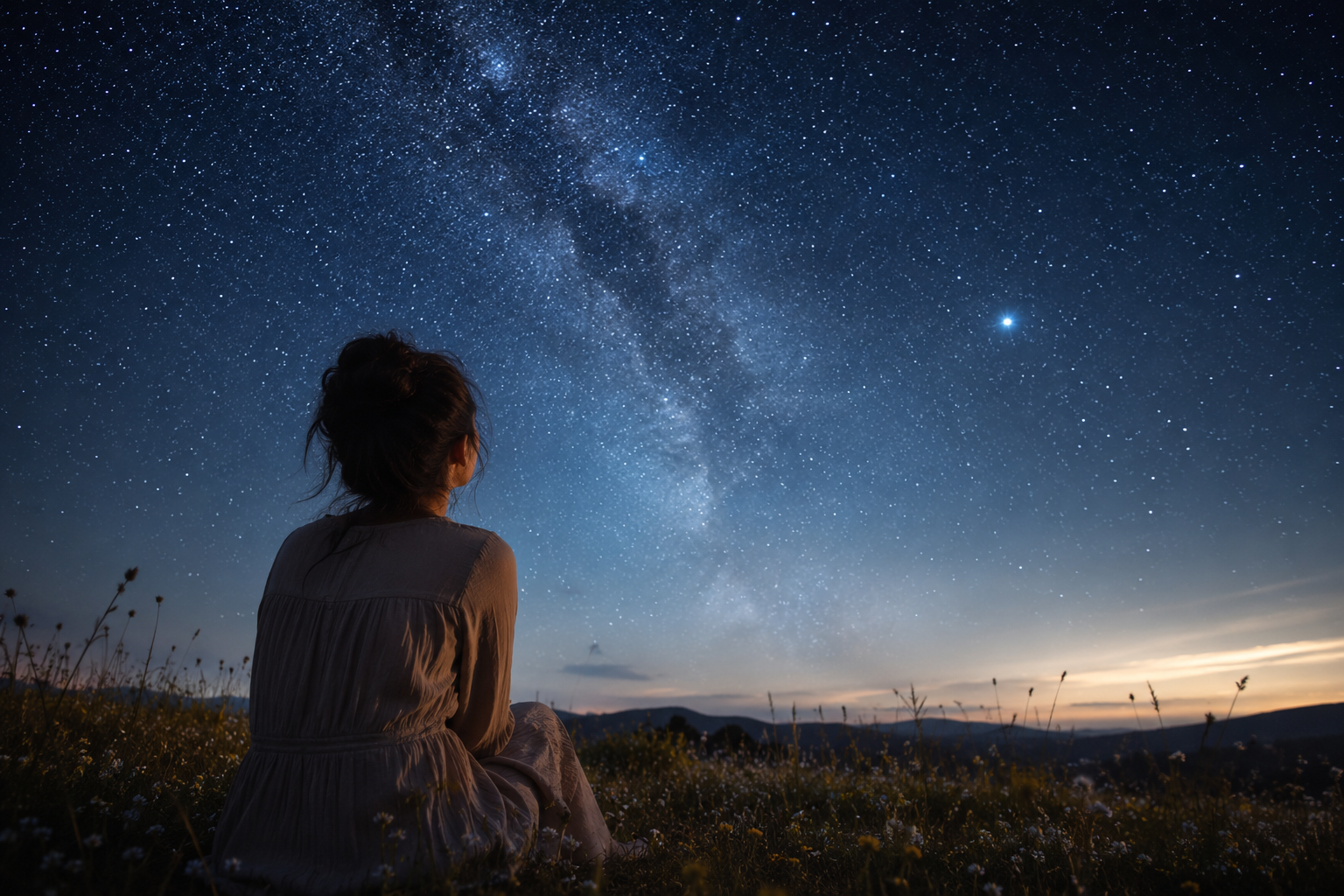
Imagine a person sitting alone.
It is night. Above them is a starry sky.
They speak their thoughts to the universe.
Not because anyone is listening.
Not because they expect an answer.
They speak because they feel that unspoken words slowly die, while spoken words begin to live a life of their own.
They give them to the world.
They don’t know where they will go.
Maybe nowhere.
Or maybe they will be remembered by another human being and live on.
Today, we no longer look up at the stars.
We look at a computer screen.
Yet, in writing, we do something very similar.
We send thoughts out into a space we do not know.
We don’t know who will read them.
We don’t know if they will make someone pause for a minute, an hour, or a lifetime.
We only know one thing.
From the moment they are published, they cease to be ours alone.
They begin their own journey.
Perhaps they will reach one person next week.
Perhaps someone will find them in a few years.
Perhaps they will go unnoticed.
It doesn’t matter.
What matters is the very gesture of sending them out into the world.
Because we do not believe that art is created solely for the author.
If that were so, all poems would remain in drawers, paintings would never leave the studio, and theater would have no need for an audience.
Creation begins in solitude.
It is a moment when a person tries to name something they could not express before.
Sometimes it is wonder.
Sometimes it is fear.
Sometimes it is the face of a stranger that stays in the memory for years.
Sometimes it is a single sentence overheard by chance.
Sometimes it is silence.
But a work does not end the moment it is written.
It only truly begins to live when it encounters another human being.
Not when it is judged.
Not when it gets thousands of likes.
But when someone reads a single sentence and thinks: "I felt that way once, too."
Or:
"I was never able to name it, and someone just did it for me."
In that single moment, the author and the reader cease to be strangers.
We do not believe that art provides ready-made answers.
We believe it helps us see what has remained invisible until now.
That a single sentence can make a person pause for a moment.
And sometimes that moment is enough to look at one's own life from a different perspective.
That is why we write.
Not to convince anyone.
Not to teach.
Not to be right.
We write because we believe that thoughts, much like starlight, need time to reach someone.
Maybe we will never know who read our texts.
Maybe we will never meet the people who paused over them for a moment.
And perhaps that is the most beautiful part.
Every text is like a light sent out into the night.
There is no telling how far it will travel. But it is worth lighting.
Zastanawiamy się czasem, czym tak naprawdę jest prowadzenie bloga.
Może nie jest niczym nowym.
Może robimy dokładnie to samo, co ludzie robili od tysięcy lat.
Wyobraź sobie człowieka siedzącego samotnie . Jest noc. Nad nim rozgwieżdżone niebo. Mówi swoje myśli do wszechświata. Nie dlatego, że ktoś go słucha. Nie dlatego, że oczekuje odpowiedzi.
Mówi, ponieważ czuje, że niewypowiedziane słowa powoli umierają, a wypowiedziane zaczynają żyć własnym życiem.
Oddaje je światu.
Nie wie, dokąd dotrą.
Może nigdzie.
A może zostaną zapamiętane przez drugiego człowieka i będą żyły dalej.
Dzisiaj nie patrzymy już w gwiazdy.
Patrzymy w ekran komputera.
Pisząc, robimy jednak coś bardzo podobnego.
Wysyłamy myśli w przestrzeń, której nie znamy.
Nie wiemy, kto je przeczyta.
Nie wiemy, czy zatrzymają kogoś na minutę, godzinę czy na całe życie.
Wiemy tylko jedno.
Od chwili publikacji przestają być wyłącznie nasze.
Rozpoczynają własną wędrówkę.
Być może trafią do jednej osoby za tydzień.
Być może ktoś odnajdzie je za kilka lat.
Być może pozostaną niezauważone.
To nie ma znaczenia.
Znaczenie ma sam gest wysłania ich w świat.
Bo nie wierzymy, że sztuka powstaje wyłącznie dla autora.
Gdyby tak było, wszystkie wiersze pozostałyby w szufladach, obrazy nigdy nie opuściłyby pracowni, a teatr nie potrzebowałby widzów.
Tworzenie zaczyna się w samotności.
Jest chwilą, w której człowiek próbuje nazwać coś, czego wcześniej nie potrafił wypowiedzieć. Czasem jest to zachwyt. Czasem lęk. Czasem twarz nieznajomego, która pozostaje w pamięci przez lata. Czasem jedno zdanie usłyszane przypadkiem. Czasem cisza.
Ale dzieło nie kończy się w chwili, gdy zostaje napisane.
Naprawdę zaczyna żyć dopiero wtedy, gdy spotka drugiego człowieka.
Nie wtedy, gdy zostanie ocenione.
Nie wtedy, gdy zdobędzie tysiące polubień.
Lecz wtedy, gdy ktoś przeczyta jedno zdanie i pomyśli:
„Ja też kiedyś tak czułem.”
Albo:
„Nigdy nie potrafiłem tego nazwać, a właśnie ktoś zrobił to za mnie.”
W tej jednej chwili autor i czytelnik przestają być sobie obcy.
Nie wierzymy, że sztuka daje gotowe odpowiedzi.
Wierzymy, że pomaga dostrzec to, co do tej pory pozostawało niewidoczne. Że jedno zdanie może zatrzymać człowieka na chwilę. A czasem ta chwila wystarcza, aby spojrzeć na własne życie z innej strony.
Dlatego piszemy.
Nie po to, by kogokolwiek przekonywać.
Nie po to, by uczyć.
Nie po to, by mieć rację.
Piszemy, ponieważ wierzymy, że myśli, podobnie jak światło gwiazd, potrzebują czasu, aby do kogoś dotrzeć.
Może nigdy nie dowiemy się, kto przeczytał nasze teksty.
Może nigdy nie poznamy ludzi, których na chwilę zatrzymały.
I chyba właśnie to jest najpiękniejsze.
Każdy tekst jest jak światło wysłane w noc.
Nie wiadomo, dokąd doleci.
Ale warto je zapalić.
Written by
Subscribe for FREE to our Audience
Enter your email to access commenting, receive memos, logs, dispatches, and unfiltered fragments directly from the Theater.







Member discussion