Drag is... a necessity!

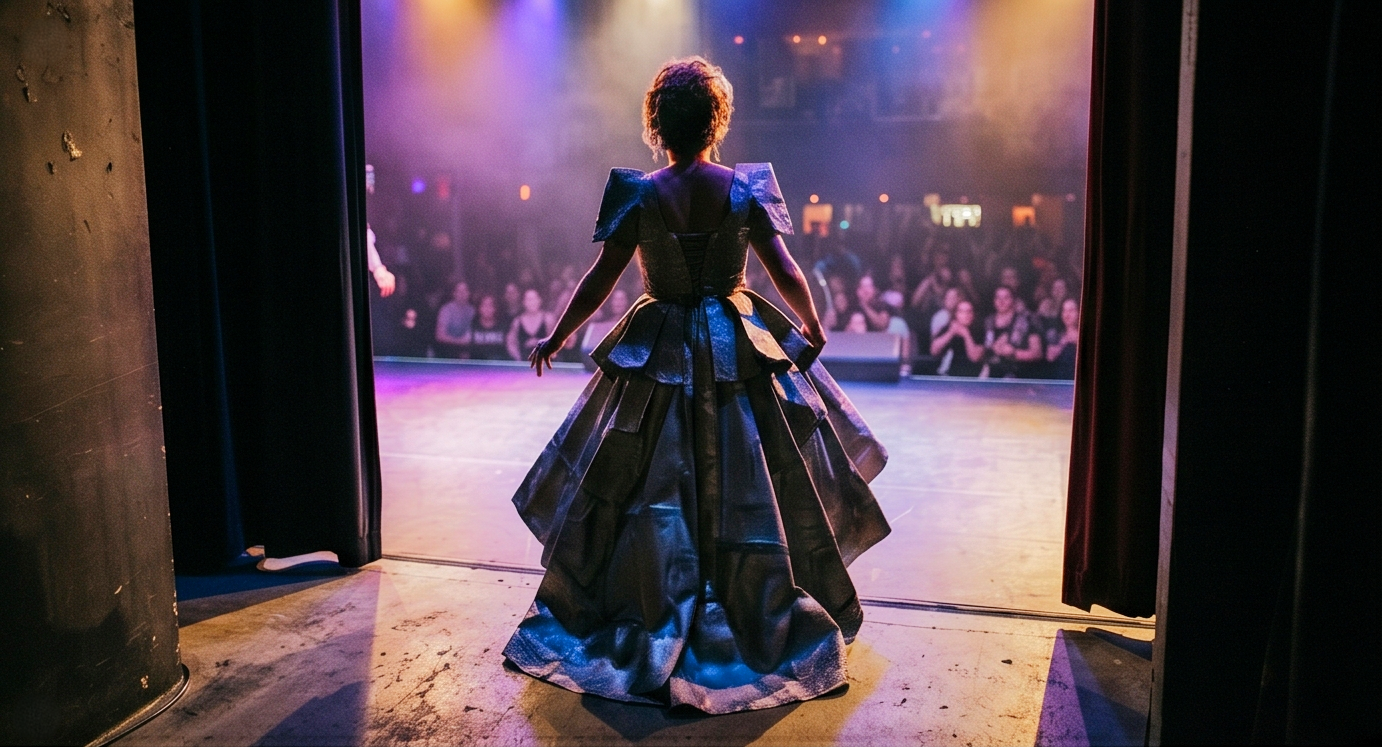
Wersja PL: Drag jest... koniecznością!
Do Królowych, Królów i całej Rodziny Królewskiej Dragu:
Kiedy świat pękał w szwach podczas plagi Covidu, a ciężar izolacji groził całkowitym zerwaniem mojego kontaktu z rzeczywistością, Wasza sztuka stała się moim absolutnym schronieniem. Obejrzałem każdą franczyzę, każdy kraj i każdą scenę, którą zaszczyciliście swoją obecnością – i to dosłownie utrzymało mnie przy zdrowych zmysłach.
Dziękuję Wam za Waszą bezgraniczną kreatywność. Ale jeszcze bardziej dziękuję za Waszą głęboką zdolność do niesienia w sobie stuleci niewypowiedzianej, queerowej traumy i przekształcania jej w błyskotliwy, bezpardonowy bunt. W świecie dławionym przez sztywną propagandę machiny nienawiści, Wy obnażacie maskaradę mainstreamu i oferujecie nam przestrzeń radykalnej, radosnej prawdy. Trzymaliście linię obrony dla naszej społeczności, gdy wszystko inne odpływało. Przetrwałem, ponieważ odmówiliście milczenia. Dziękuję!
— Kristopher Lichtanski
************************
Przez dziesięciolecia główne dyskusje wokół dragu traktowały go jako zabawną, teatralną parodię płci – kolorowy bal przebierańców lub akt politycznej dywersji. Jeśli zetknęliście się z akademickimi teoriami na temat dragu, najprawdopodobniej trafiliście na koncepcję „performatywności płci” (gender performativity), spopularyzowaną przez białe, feministyczne akademiczki: ideę, że płeć jest po prostu społecznym scenariuszem, który powtarzamy tak długo, aż wyda się realny.
Jednak dla zmarginalizowanych, queerowych i transpłciowych osób – zwłaszcza tych z czarnych, brązowych i wykluczonych społeczności, gdzie drag narodził się jako narzędzie dosłownego przetrwania w przestrzeniach takich jak kultura balowa (ballroom scene) – ta teoria „spektaklu” wydaje się całkowicie spłycona. Traktuje ona płeć jak wybór, którego dokonujesz rano podczas ubierania się, ignorując głębokie, często bolesne siły psychiczne, które kształtują to, kim jesteśmy pod skórą.
Właśnie dlatego lakanowskie, psychoanalityczne podejście do dragu nie jest tylko użyteczne – jest koniecznością. Ramy teoretyczne Lacana nie traktują dragu jako powierzchownej parodii „prawdziwej” płci. Zamiast tego dostarczają radykalnego słownika, by pokazać, że każda płeć jest kostiumem, a drag queens, drag kings i osoby performerskie są zaawansowanymi architektami ludzkiej podmiotowości. Patrząc na drag przez pryzmat Lacana, wyrywamy go z pozycji towaru służącego rozrywce dominującej kultury i uznajemy go za głęboką, rewolucyjną manipulację na ludzkiej nieświadomości.
Maska Fallusa: Obnażenie uniwersalnego kodu oszustwa
Aby zrozumieć drag od strony psychoanalitycznej, musimy zacząć od najbardziej wyzwalającej i destabilizującej tezy Lacana: coś takiego jak autentyczna, biologiczna tożsamość płciowa nie istnieje.
W tradycyjnej kulturze Zachodu jesteśmy wychowywani w przekonaniu, że „mężczyzna” i „kobieta” to stabilne, naturalne kategorie zakotwiczone w ciele. Lacan całkowicie to druzgoce. Argumentuje, że wejście w ludzką kulturę wymaga od nas wkroczenia w Porządek Symboliczny (sferę języka, prawa i ról społecznych). Aby zostać uznanym za podmiot, musisz wybrać pozycję płciową. Ponieważ jednak pozycje te są sztucznymi konstruktami językowymi, nikt nigdy nie pasuje do nich idealnie.
Lacan ogłosił wprost, że w kwestii płci zarówno mężczyźni, jak i kobiety grają w tę samą grę maskarady (Lacan, 1958/2006).
- Pozycja męska wymaga od osoby udawania, że posiada „Fallusa” (lakanowski termin oznaczający ostateczny symbol władzy, autorytetu i kompletności).
- Pozycja kobieca wymaga od osoby udawania, że jest Fallusem dla pragnienia kogoś innego.
Ponieważ Fallus jest mitem – nikt go faktycznie nie ma i nikt nim być nie może – każdy nieustannie udaje. Każdy cispłciowy mężczyzna zakładający dopasowany garnitur, by projektować autorytet, jest w dragu; każda cispłciowa kobieta modyfikująca swoje ciało, by dopasować się do kulturowego kanonu piękna, jest w dragu.
Tym, co czyni drag queen lub drag kinga tak wyjątkowymi, jest fakt, że jako jedyni są oni właścicielami tego oszustwa. Podczas gdy kultura dominująca chodzi dookoła w stanie neurozy, rozpaczliwie próbując przekonać samą siebie, że ich płeć jest prawdziwa, artysta drag w pełni oddaje się maskaradzie. Drag nie naśladuje prawdziwej kobiety ani prawdziwego mężczyzny; on naśladuje samo naśladownictwo (Chiesa, 2023). Poprzez wyolbrzymienie konturowania, wyściółek (paddingu), włosów lub zarostu do absurdalnego, hiperwidocznego stopnia, drag ujawnia sekret, który główne społeczeństwo próbuje ukryć: że wszystkie role płciowe są pustymi, skonstruowanymi maskami.
Odzyskanie „obiektu małe a” i potęga nadmiaru
Dla mniejszościowych i zmarginalizowanych społeczności queer drag historycznie był aktem przetrwania w starciu z wrogim, heteronormatywnym Porządkiem Symbolicznym. Społeczeństwo mówi queerowemu, rasowemu ciału, że jest ono miejscem „braku” – że jest wadliwe, złe lub niewidzialne.
Drag kontruje to poprzez uzbrojenie tego, co Lacan nazwał objet petit a (obiektem-przyczyną pragnienia) oraz jouissance (nadmierną, przełamującą granice rozkoszą).
Kiedy performer wchodzi na scenę w pełnym dragu, przekształca swoje zmarginalizowane ciało w hipermagnetyczny spektakl pragnienia i lęku. Nie prosi o pozwolenie na istnienie w ramach reguł dominującej kultury. Zamiast tego przejmuje spojrzenie (the gaze) publiczności. Jak zauważają współcześni teoretycy psychoanalizy, drag doprowadza do zderzenia z Realnym – tą nieuporządkowaną, traumatyczną, nienazywalną strefą naszej psychiki, która kryje się pod naszym ugrzecznionym językiem (Gherovici, 2017).
Drag wywołuje zakłócenie, ponieważ uruchamia głęboką dezorientację psychiczną u widza. Widz zostaje zmuszony do skonfrontowania się z własnymi nieświadomymi pragnieniami: Dlaczego pociąga mnie ten obraz? Dlaczego ten spektakl płci wydaje się bardziej żywy niż moje własne codzienne życie? Drag zmusza dominującą kulturę do konfrontacji z własnym wyparciem, zamieniając scenę w zwierciadło, w którym obnażone zostają ukryte lęki i przywiązania publiczności.
Sinthome: Drag jako autonomiczna technologia przetrwania
Dla wielu osób ze zmarginalizowanych grup odkrycie dragu nie polega na „przywdzianiu sztucznej persony” – to moment, w którym w końcu czują się realnie. Tę paradoksalną prawdę pięknie wyjaśnia późne lakanowskie pojęcie Sinthome.
Sinthome to wysoce specyficzny, unikalny twór, który człowiek konstruuje, aby zszyć swoją psychikę w całość, gdy standardowe reguły społeczeństwa zawodzą. Jeśli dorastasz w kulturze, w której twoja rasa, seksualność i płeć są gwałtownie odrzucane przez dominujący Porządek Symboliczny, twój umysł staje w obliczu bardzo realnego zagrożenia rozpadem. Nie możesz użyć standardowych narzędzi społeczeństwa do zbudowania stabilnego poczucia siebie, ponieważ narzędzia te zostały zaprojektowane po to, by cię wymazać.
Drag funkcjonuje jako wspaniałe, ratujące życie Sinthome (Gherovici, 2010). Poprzez stworzenie drag persony – wraz z nowym imieniem, określoną estetyką, unikalnym stylem występów i wybraną rodziną (chosen family) – jednostka wymyśla zupełnie nowy sposób na zaplecenie swojej rzeczywistości.
Właśnie dlatego kultura balowa (ballroom) i historyczne domy dragu (jak te udokumentowane w filmie Paris Is Burning) nigdy nie były tylko konkursem piękności; były alternatywnymi Porządkami Symbolicznymi. Zapewniały imiona, tytuły, prawa i systemy pokrewieństwa dla ludzi, którzy zostali wyrzuceni przez swoje rodziny biologiczne i państwo. Drag pozwolił im przekierować swoją traumę, ubóstwo i wykluczenie w wysoką formę sztuki stanowiącą pancerz psychiczny. To autonomiczna technologia uzdrawiania, która nie potrzebuje aprobaty białego, heteronormatywnego establishmentu psychiatrycznego.
Dlaczego skupienie się na tym jest koniecznością
Musimy skupić się na tych psychoanalitycznych wymiarach dragu, ponieważ kultura dominująca próbuje obecnie pozbawić go rewolucyjnych zębów. Z jednej strony prawicowe siły polityczne patologizują drag, traktując go jako niebezpieczne oszustwo lub zagrożenie dla rodziny nuklearnej. Z drugiej strony kapitalistyczne media sterylizują drag, zamieniając go w strawny, utowarowiony produkt telewizyjny typu reality-show, odarty ze swoich transgresyjnych korzeni.
Jeśli będziemy bronić dragu jedynie jako „niewinnej rozrywki” lub „teatru”, przegramy ten spór. Musimy bronić dragu za to, czym jest w istocie: wyrafinowaną, psychoanalityczną krytyką cywilizacji, dokonywaną przez tych, którzy zostali zepchnięci na margines.
Postawienie tych idei w centrum pozwala mniejszościowym społecznościom uznać, że nasze historyczne subkultury posiadają ogromną głębię intelektualną i psychologiczną. Drag queens i drag kings nie są jedynie wykonawcami próbującymi wpasować się w binarny świat; to radykalni teoretycy nieświadomości. Pokazują nam, że jeśli płeć jest więzieniem masek, mamy moc te maski zerwać, przemalować i odbudować całkowicie na własnych warunkach.
Bibliografia i lektury uzupełniające
Chiesa, L. (2023). The Structural Masquerade: Lacan and the Politics of the Aesthetic. Concept Publishing.
- Nacisk na: Koncepcję, według której drag nie parodiuje biologicznej płci, lecz obnaża fakt, że każda tożsamość płciowa w Porządku Symbolicznym jest z natury rzeczą zapożyczoną i wyreżyserowaną.
Dean, T. (2000). Beyond Sexuality. University of Chicago Press.
- Nacisk na: Przeformułowanie seksualności poza tradycyjne ramy tożsamościowe, otwierające przestrzeń na lakanowską analizę transgresji i pragnienia.
Fink, B. (1997). A Clinical Introduction to Lacanian Psychoanalysis: Theory and Technique. Harvard University Press.
- Nacisk na: Podstawowy podręcznik do mechanizmów klinicznych, pokazujący jak formuje się podmiot w relacji do Wielkiego Innego.
Gherovici, P. (2010). Please Select Your Gender: From the Invention of Hysteria to the Democratization of Transgenderism. Routledge.https://doi.org/10.4324/9780203855584
- Nacisk na: Wprowadzenie dragu i ekspresji transpłciowej jako ratującego życie mechanizmu Sinthome, który pozwala podmiotowi utrzymać integralność psychiczną w opresyjnym otoczeniu.
Gherovici, P. (2017). Transgender Psychoanalysis: A Lacanian Perspective on Sexual Difference. Routledge.https://doi.org/10.4324/9781315159447
- Nacisk na: Analizę zderzenia z Realnym na scenie. Pokazuje, jak drag i transgresja płciowa wywołują dezorientację u widza, zmuszając dominującą kulturę do konfrontacji z własnym wyparciem.
Lacan, J. (2006). The Signification of the Phallus. W: Écrits: The First Complete Edition in English (tłum. B. Fink, str. 575–584). W. W. Norton & Company. (Oryginał opublikowany 1958).
- Nacisk na: Kanoniczny tekst Lacana o „znaczeniu fallusa”. Definiuje płeć jako grę maskarady, w której mężczyźni udają, że mają Fallusa, a kobiety udają, że nim są.
Mercer, K. (1994). Welcome to the Jungle: New Positions in Black Cultural Studies. Routledge.
- Nacisk na: Intersekcjonalne podłoże kultury balowej (ballroom). Pokazuje, jak czarne i brązowe społeczności queer stworzyły własne systemy symboliczne w celach przetrwania.
Riviere, J. (1929). Womanliness as a masquerade. The International Journal of Psychoanalysis, 10, 303–313.
- Nacisk na: Historyczny tekst Joan Riviere o kobiecości jako maskaradzie, który stał się fundamentem dla późniejszych analiz Lacana oraz teorii performatywności.
************************************
Nie jestem artystą scenicznym – to tylko test! Powtarzam, to tylko test! Proszę, wspierajcie swoich lokalnych artystów i wykonawców! Idźcie zobaczyć teatr na żywo, drag, taniec lub jakikolwiek performans w Waszej okolicy! Dziękuję!
To the Queens, the Kings, and the Royalty of Drag:
When the world fractured during the Covid plague, and the weight of isolation threatened to break my grip on reality, your art became my absolute sanctuary. I watched every single franchise, every country, and every stage you graced—and it quite literally kept me sane.
Thank you for your boundless creativity. But even more, thank you for your profound capacity to hold centuries of unspoken queer trauma and transmute it into brilliant, unapologetic defiance. In a world stifled by the rigid propaganda of the hate machine, you expose the mainstream masquerade and offer us a space of radical, joyful truth. You held the line for our community when everything else drifted away. I survived because you refused to be silent. Thank you! - Kristopher Lichtanski.

For decades, mainstream discussions around drag have treated it as a fun, theatrical parody of gender—a colorful costume party or an act of political subversion. If you have encountered academic theories about drag, you’ve likely run into the concept of "gender performativity" popularized by white feminist academics: the idea that gender is just a social script we repeat until it feels real.
But for minoritized, queer, and trans folks—especially those from Black, Brown, and excluded communities where drag was born as a tool of literal survival in spaces like the ballroom scene—this "performance" theory feels entirely too shallow. It treats gender like a choice you make when you get dressed in the morning, ignoring the profound, often painful psychic forces that shape who we are under the skin.
This is exactly why a Lacanian psychoanalytic approach to drag is not just useful—it is a necessity. Lacan’s framework doesn't treat drag as a superficial parody of a "real" gender. Instead, it provides the radical vocabulary to show that all gender is a costume, and that drag queens, kings, and performers are the advanced architects of human subjectivity. By looking at drag through a Lacanian lens, we reclaim it from being a commodity for the dominant culture’s entertainment and recognize it as a profound, revolutionary manipulation of the human unconscious.
The Mask of the Phallus: Exposing the Universal Cheat Code
To understand drag psychoanalytically, we have to start with Lacan’s most liberating, destabilizing claim: There is no such thing as an authentic biological gender identity.
In traditional Western culture, we are raised to believe that "man" and "woman" are stable, natural categories anchored in the body. Lacan completely shatters this. He argues that entering human culture requires us to step into the Symbolic Order (the realm of language, law, and social roles). To be recognized as a subject, you have to choose a gendered position. But because these positions are artificial linguistic constructs, no one ever fits them perfectly.
Lacan famously declared that when it comes to gender, both men and women are playing a game of masquerade (Lacan, 1958/2006).
- The masculine position requires a person to pretend they have the "Phallus" (Lacan’s term for the ultimate symbol of power, authority, and completeness).
- The feminine position requires a person to pretend to be the Phallus for someone else's desire.
Because the Phallus is a myth—nobody actually has it, and nobody can actually be it—everyone is always faking it. Every cisgender man putting on a sharp suit to project authority is in drag; every cisgender woman altering her body to fit a cultural standard of beauty is in drag.
What makes the drag queen or king so special is that they are the only ones who own the fraud. While the dominant culture walks around in a state of neurosis, desperately trying to convince themselves that their gender is real, the drag performer leans entirely into the masquerade. Drag doesn't imitate a real woman or a real man; it imitates the imitation (Chiesa, 2023). By exaggerating the contouring, the padding, the hair, or the facial hair to an absurd, hyper-visible degree, drag exposes the secret that mainstream society tries to hide: that all gender roles are hollow, constructed masks.
Reclaiming the "Objet petit a" and the Power of Excess
For minority and marginalized queer communities, drag has historically been an act of survival against a hostile, straight Symbolic Order. Society tells the queer, racialized body that it is a site of "lack"—that it is defective, wrong, or invisible.
Drag counters this by weaponizing what Lacan called the objet petit a (the object-cause of desire) and jouissance (excessive, boundary-breaking pleasure).
When a performer steps onto a stage in full drag, they transform their marginalized body into a hyper-magnetic spectacle of desire and anxiety. They do not ask for permission to exist within the dominant culture's rules. Instead, they hijack the audience's gaze. As contemporary psychoanalytic theorists note, drag creates a collision with the Real—the messy, traumatic, unnamable zone of our psyche that sits beneath our polite language (Gherovici, 2017).
Drag causes a disruption because it triggers a profound psychic disorientation in the spectator. The viewer is forced to confront their own unconscious desires: Why am I attracted to this image? Why does this performance of gender feel more alive than my own daily life? Drag forces the dominant culture to confront its own repression, turning the stage into a mirror where the audience's hidden anxieties and attachments are laid bare.
The Sinthome: Drag as an Autonomous Technology of Survival
For many minoritized folks, discovering drag is not about "putting on a fake persona"—it is the moment they finally feel real. This paradoxical truth is beautifully explained by Lacan’s late concept of the Sinthome.
The sinthome is a highly specific, singular creation that a person constructs to stitch their psyche together when the standard rules of society fail them. If you grow up in a culture where your race, your sexuality, and your gender are violently rejected by the dominant Symbolic Order, your mind faces a very real threat of collapse. You cannot use society's standard tools to build a stable sense of self because society's tools are designed to erase you.
Drag functions as a magnificent, life-saving sinthome (Gherovici, 2010). By creating a drag persona—complete with a new name, a specific aesthetic, a unique performance style, and a chosen family—the individual invents a brand-new way to knot together their reality.
This is why the ballroom culture and historical drag houses (like those documented in Paris Is Burning) were never just about pageantry; they were alternative Symbolic Orders. They provided names, titles, laws, and kinship systems for people who had been cast out by their biological families and the state. Drag allowed them to channel their trauma, their poverty, and their exclusion into a high-art form of psychic armor. It is an autonomous technology of healing that doesn’t require the approval of a white, straight psychiatric establishment.
Why Focusing on This is a Necessity
We must focus on these psychoanalytic dimensions of drag because the dominant culture is currently attempting to strip drag of its revolutionary teeth. On one side, right-wing political forces pathologize drag, treating it as a dangerous deception or a threat to the nuclear family. On the other side, capitalist media sanitizes drag, turning it into a palatable, commodified reality TV show stripped of its transgressive roots.
If we only defend drag as "harmless entertainment" or "theatre," we lose the argument. We must defend drag for what it truly is: a sophisticated, psychoanalytic critique of civilization executed by the marginalized.
Centering these ideas allows minoritized communities to recognize that our historical subcultures possess immense intellectual and psychological depth. Drag queens and kings are not merely performers trying to fit into a binary world; they are radical theorists of the unconscious. They show us that if gender is a prison of masks, we have the power to tear those masks off, paint them over, and rebuild them entirely on our own terms.
Bibliography & Further Reading
Chiesa, L. (2023). The Structural Masquerade: Lacan and the Politics of the Aesthetic. Concept Publishing.
Dean, T. (2000). Beyond Sexuality. University of Chicago Press.
Fink, B. (1997). A Clinical Introduction to Lacanian Psychoanalysis: Theory and Technique. Harvard University Press.
Gherovici, P. (2010). Please Select Your Gender: From the Invention of Hysteria to the Democratization of Transgenderism. Routledge. https://doi.org/10.4324/9780203855584
Gherovici, P. (2017). Transgender Psychoanalysis: A Lacanian Perspective on Sexual Difference. Routledge. https://doi.org/10.4324/9781315159447
Lacan, J. (2006). The Signification of the Phallus. In Écrits: The First Complete Edition in English (B. Fink, Trans., pp. 575–584). W. W. Norton & Company. (Original work published 1958).
Mercer, K. (1994). Welcome to the Jungle: New Positions in Black Cultural Studies. Routledge.
Riviere, J. (1929). Womanliness as a masquerade. The International Journal of Psychoanalysis, 10, 303–313.
I am not a performing artist - this is only a test! I repeat, this is only a test! Please support your actual local Performers! Go see a live theater, drag, dance, or any performative art installation show near you! Thank you!
Written by

Subscribe for FREE to our Audience
Enter your email to access commenting, receive memos, logs, dispatches, and unfiltered fragments directly from the Theater.











Member discussion