List , 14 czerwca 2026

ENG Version: Letter, June 14, 2026
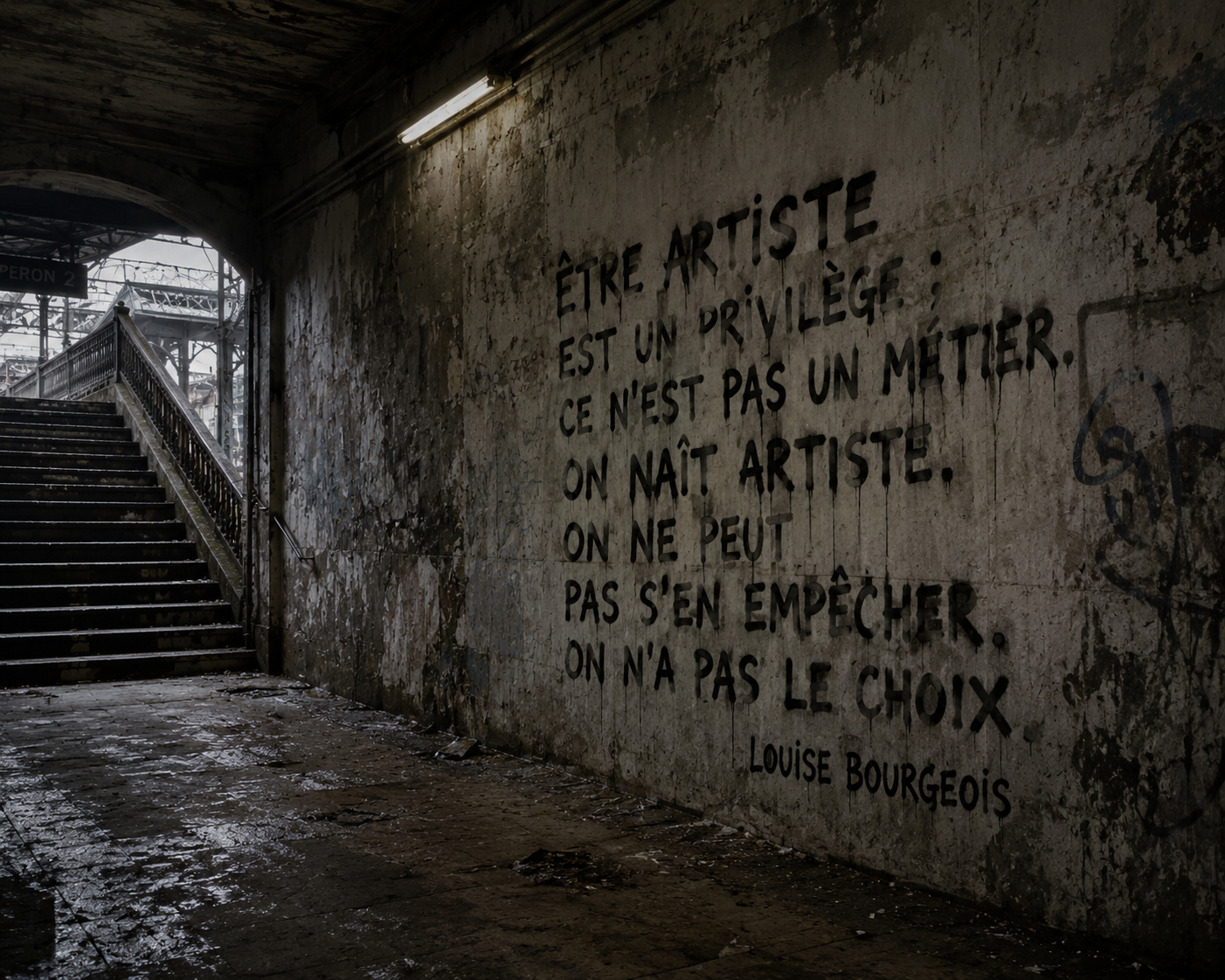
"Being an artist is a privilege; it is not a profession. One is born an artist. One cannot help it. One has no choice."
This sentence has been following me around all morning. Sentences like that are dangerous because you think you've read a quote, but meanwhile, it’s the quote that starts reading you.
"Being an artist is a privilege, not a profession. We are born artists. We have no choice."
And now I’m sitting here in this heat, pondering...
Because on one hand, I instinctively rebel. What do you mean—we have no choice? After all, for so many years I chose not to be. Not to stick my neck out. Not to speak too loudly. Not to step onto the stage. Not to do it. To put it off. To pretend to be reasonable. To pretend to be someone dealing with normal matters.
But on the other hand—did I really choose?
Think back to all those years. Theatre came anyway. Through a different door. If not through the stage—then through the text. If not through the light—then through the imagination of light. If not through a role—then through a conversation about a role. Like water. It always finds a crack.
And that's when I start to understand that maybe Louise isn't talking about talent. Maybe it's not about that romantic "I am an artist," but about something much more uncomfortable.
Maybe it's about the inability to live completely on the surface.
An artist isn't the one who exhibits.
An artist is the one who cannot stop seeing.
And if so, then it truly isn't a profession.
Because you can change a profession.
You can quit.
You can take a vacation.
But you can't do that with a way of seeing.
You can only try to drown it out.
And there is one more thing in this sentence that troubles me.
The word "privilege."
Because we often think of an artist as someone chosen, but more and more I get the impression that this isn't a privilege in the sense of a reward.
It’s a privilege like old family silverware—beautiful, but you have to polish it your whole life.
You are given the opportunity to experience the world a little more intensely. But you pay for it by experiencing it a little more intensely.
And maybe that's why we’ve talked so many times about whether a person creates theatre, or whether theatre creates the person.
Because maybe it's similar with being an artist.
A finished artist isn't born.
What is born is a certain wound. A certain hypersensitivity. A certain refusal to accept that things are only what they appear to be.
And then, over the years, you build a craft around it, a stage, books, paintings, puppets, performances, entire institutions.
And one day, you look in the mirror and discover that you didn't create the work. The work patiently created you over the years...
I've completely lost my mind... I'm stopping here.
Bye, bye, bye and bisous, bisous,
M.
Krzysztofie,
« Être artiste est un privilège ; ce n'est pas un métier. On naît artiste. On ne peut pas s'en empêcher. On n'a pas le choix. »
„Bycie artystą to przywilej; to nie jest zawód. Artystą człowiek się rodzi. Nie można nic na to poradzić. Nie ma się wyboru”.
Cały poranek chodzi za mną to zdanie. Takie zdania są niebezpieczne, bo człowiek myśli, że przeczytał cytat, a tymczasem to cytat zaczyna czytać człowieka.
„Bycie artystą jest przywilejem, nie zawodem. Rodzimy się artystami. Nie mamy wyboru.”
I siedzę teraz w tym upale i rozmyślam..
Bo z jednej strony odruchowo się buntuję. Jak to — nie mamy wyboru? Przecież tyle lat wybierałam nie być. Nie wychylać się. Nie mówić za głośno. Nie wchodzić na scenę. Nie robić. Odkładać. Udawać rozsądną. Udawać człowieka od normalnych spraw.
A z drugiej strony — czy naprawdę wybierałam?
Przypomnij sobie wszystkie te lata. Przecież teatr i tak przychodził. Innymi drzwiami. Nie sceną — to tekstem. Nie światłem — to wyobrażeniem światła. Nie rolą — tylko rozmową o roli. Jak woda. Zawsze znajdzie szczelinę.
I wtedy zaczynam rozumieć, że może Louise nie mówi o talencie. Może nie chodzi o to romantyczne „jestem artystką”, tylko o coś dużo bardziej niewygodnego.
Może chodzi o niemożność życia całkiem po powierzchni.
Artysta to nie ten, kto wystawia. Artysta to ten, kto nie umie przestać widzieć.
I wtedy to rzeczywiście nie jest zawód.
Bo zawód można zmienić. Można rzucić. Można wziąć urlop.
A od sposobu patrzenia nie.
Można tylko próbować go zagłuszyć.
I jeszcze jedno mnie w tym zdaniu niepokoi.
Słowo „przywilej”.
Bo my często myślimy o artyście jak o kimś wybranym, a ja coraz częściej mam wrażenie, że to nie jest przywilej w sensie nagrody.
To przywilej jak stare rodzinne srebra — piękne, ale trzeba je czyścić całe życie.
Dostajesz możliwość przeżywania świata trochę bardziej. Ale płacisz za to tym, że przeżywasz go trochę bardziej.
I może dlatego tyle razy rozmawialiśmy o tym, czy człowiek tworzy teatr, czy teatr tworzy człowieka.
Bo może z tym artystą jest podobnie.
Nie rodzi się gotowy artysta.
Rodzi się pewna rana. Pewna nadwrażliwość. Pewien brak zgody, żeby rzeczy były tylko tym, czym są.
A potem przez lata buduje się wokół tego warsztat, scenę, książki, obrazy, lalki, przedstawienia, całe instytucje.
I któregoś dnia patrzy się w lustro i odkrywa, że to nie ty stworzyłeś dzieło.
To dzieło przez lata cierpliwie stworzyło ciebie...
Popieprzyło mnie zupełnie... kończę...
pa, pa, pa i bisus, bisous,
M.
Written by
Subscribe for FREE to our Audience
Enter your email to access commenting, receive memos, logs, dispatches, and unfiltered fragments directly from the Theater.







Member discussion