The Pass

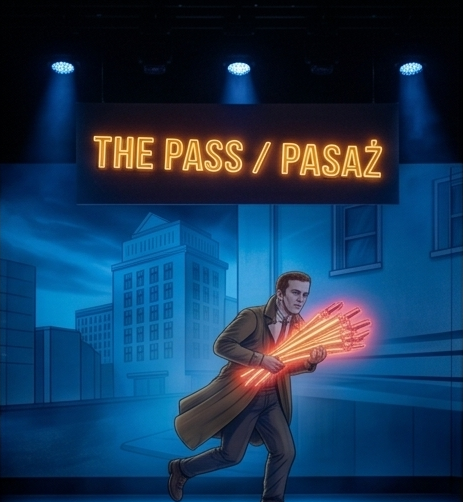
Wersja PL: Procedura Pasażu (La Passe)
Ujęcie Procedury Pasażu (la passe) z perspektywy topologicznej pozwala precyzyjnie wskazać ten konkretny moment, w którym analizowany (analizant) mutuje w analityka.
Lacan wprowadził procedurę Pasażu w swojej „Propozycji” z 1967 roku, pierwotnie ujmując ją w ramy językoznawstwa strukturalistycznego (jako deflację/rozbrojenie Podmiotu Domniemanego, fr. Sujet supposé savoir). Jednak w jego późnym nauczaniu, a zwłaszcza w Seminarium XXIV (L'insu que sait de l'une-bévue s'aile à mourre / „Niewiedza, która wie o jednej-omyłce, unosi się ku miłości/grze w morra”), Pasaż zostaje całkowicie przedefiniowany jako wydarzenie topologiczne o charakterze konwersji strukturalnej.
Jeśli koniec analizy oznacza ustabilizowanie węzła za pomocą Sinthome, to Pasaż jest specyficzną operacją topologiczną przeprowadzaną na tym nowo ustabilizowanym węźle.
Oddzielenie obiektu a od centrum
Jak ustaliliśmy wcześniej, w samym sercu procesu analizy obiekt a tkwi mocno zaklinowany na centralnym przecięciu pierścieni Realnego, Symbolicznego i Wyobrażeniowego. Działa on jak studnia grawitacyjna, która trzyma podmiot w uwięzi jego neurozy, każąc mu obsesyjnie krążyć wokół swoich utraconych obiektów.
W Pasażu ten klin zostaje strukturalnie przemieszczony.
- Przesunięcie topologiczne: Pasaż polega na ewakuacji lub ekstrakcji (wyciągnięciu) obiektu a z owej centralnej próżni.
- Efekt: Zamiast krążyć wokół obiektu a jako ukrytej przyczyny cierpienia, podmiot wyrzuca obiekt a na zewnątrz. Podmiot staje twarzą w twarz z nagą, odetkaną centralną dziurą węzła boromejskiego – absolutną, pozbawioną sensu próżnią Porządku Realnego. Lacan nazywa to „subiektywnym ubóstwem” (destitution subjective). Uświadamiasz sobie wówczas, że nie ma żadnego ukrytego znaczenia, nie ma Wielkiego Innego, który mógłby cię uprawomocnić, a ty jesteś po prostu resztką (odpadem) pozostałą po języku.
Inwersja: Podmiot staje się odpadem
Rzeczywiste przejście od statusu analizanta do statusu analityka wymaga radykalnej inwersji przestrzennej. Jako analizant siedzisz na krawędzi węzła, patrząc do wewnątrz, w kierunku centrum, i żądasz od analityka, by wypełnił twoją centralną próżnię lub wyjaśnił twój rebus.
Kiedy przechodzisz Pasaż, ulegasz inwersji podobnej do wywrócenia wstęgi Möbiusa lub butelki Kleina na drugą stronę:
Pozycja Analizanta: Krąży wokół centrum, szukając sensu - traversing Pasaż (la passe) - w Pozycję Analityka: który umieszczony w centrum, zajmuje próżnię jako obiekt-odpad
Przechodząc przez Pasaż, akceptujesz swój status jako obiektu a (odpadu, skrawka Realnego). Zgadzasz się zasiąść w centrum czyjegoś rozpadającego się węzła, działając jako ta ruchoma płytka lub strukturalny hak, którego inni potrzebują do odbudowania swojej rzeczywistości. Nie potrafisz tego zrobić, jeśli wciąż próbujesz załatać swoją własną centralną dziurę wyobrażeniowymi znaczeniami.
Pasaż jako test „eX-systencji”
Ostatecznie Pasaż jest instytucjonalnym testem dla Sinthome. Osoby pośredniczące (les passeurs) są wybierane do wysłuchania świadectwa kandydata, aby zweryfikować, czy nastąpiła autentyczna transformacja topologiczna.
Czego oni wypatrują/wysłuchują? Nie sprawdzają, czy kandydat jest idealnie szczęśliwy lub wyleczony. Sprawdzają matematykę węzła:
- Czy kandydat przestał próbować odkodowywać swój symptom jak rebus?
- Czy skutecznie oddzielił Rozkosz Falliczną od pierścienia Symbolicznego?
- Czy jego Sinthome posiada niezależną eX-systencję – co oznacza, że stoi stabilnie jako samodzielny mechanizm węzłowy, który nie opiera się już na obecności analityka ani na aprobacie psychoanalitycznej instytucji?
Z topologicznego punktu widzenia Pasaż jest weryfikacją tego, że podmiot z powodzeniem ukończył swój projekt inżynierii strukturalnej. Kandydat zszył swoje własne taśmy Möbiusa, wyciągnął fantazmatyczny klin z samego środka i potrafi teraz poradzić sobie z nagą próżnią Realnego bez rozpadania się na kawałki.
Bibliografia i lektury uzupełniające
Lacan, Jacques – Seminarium, Księga XX: Jeszcze (1972-1973)
- Nacisk na: Oficjalne wprowadzenie węzła boromejskiego. Lacan używa go tutaj do zmapowania dystrybucji Rozkoszy Fallicznej, Rozkoszy Innego oraz Znaczenia/Sensu (Sens).
Lacan, Jacques – Seminarium, Księga XXIII: Sinthome (1975-1976)
- Nacisk na: Pozycja absolutnie fundamentalna dla tej dyskusji. Odnajdziemy tu lekturę Jamesa Joyce'a w wydaniu Lacana, wynalezienie czwartego pierścienia, koncepcję savoir-faire (wiedzy-jak-żyć) z symptomem oraz pokazanie, jak strukturalna wada zostaje naprawiona bez użycia cięcia.
Lacan, Jacques – „Propozycja z 9 października 1967 r. o psychoanalityku Szkoły” oraz Seminarium XXIV: L'insu que sait de l'une-bévue s'aile à mourre (1976-1977)
- Nacisk na: „Propozycja” wprowadza instytucjonalny aparat Pasażu, podczas gdy Seminarium XXIV reinterpretuje Pasaż przez pryzmat jego późnej topologii jako strukturalną inwersję.
To address the Pass (la passe) from a topological perspective is to pinpoint the exact moment an analysand mutates into an analyst.
Lacan introduced the procedure of the Pass in his 1967 "Proposition," initially framing it through structuralist linguistics (the deflation of the Subject-Supposed-to-Know). But by his late teaching, specifically in Seminar XXIV (L'insu que sait de l'une-bévue s'aile à mourre / "The unknowing that knows about the one-blunder wings its way to morra"), the Pass is completely re-conceptualized as a topological event of structural conversion.
If the end of analysis means stabilizing the knot via the Sinthome, the Pass is a specific topological operations performed on that newly stabilized knot.
The Separation of objet a from the Center
As we established, during the meat of an analysis, objet a is wedged tightly at the central intersection of the Real, Symbolic, and Imaginary rings. It acts as the gravitational sink keeping the subject hooked to their neurosis, obsessing over their lost objects.
In the Pass, this wedge is structurally displaced.

- The Topological Shift: The pass constitutes the evacuation or extraction of objet a from that central void.
- The Effect: Instead of the subject circling around objet a as a hidden cause of suffering, objet a is cast out. The subject faces the bare, un-plugged central hole of the Borromean knot—the absolute, meaningless void of the Real. Lacan calls this the "subjective destitution." You realize there is no hidden meaning, no big Other to validate you, and that you are simply the remainder left over by language.
Inversion: The Subject Becomes the Waste Product
The actual transition from analysand to analyst requires a radical spatial inversion.
As an analysand, you sit at the edge of the knot looking inward toward the center, demanding that the analyst fill your central void or explain your rebus.
When you pass, you undergo an inversion similar to turning a Möbius strip or a Klein bottle inside out:
Analysand Position: Revolves around the center, seeking meaning - traversing the Pass - into the Analyst Position: Placed at the center, occupying the void as object-waste.
By traversing the Pass, you accept your status as objet a (the waste product, the scrap of the Real). You agree to sit at the center of someone else’s failing knot, acting as the loose tile or the structural hook they need to reconstruct their reality. You cannot do this if you are still trying to patch up your own central hole with imaginary meanings.
The Pass as an "Ex-Sistence" Test
Ultimately, the Pass is the institutional test of the Sinthome. The "passers" (les passeurs) are chosen to listen to the candidate's testimony to verify if a genuine topological transformation occurred.
What are they listening for? They aren't checking if the candidate is perfectly happy or cured. They are checking the math of the knot:
- Has the candidate ceased trying to decode their symptom like a rebus?
- Have they successfully separated Phallic Jouissance from the Symbolic ring?
- Does their Sinthome possess independent ex-sistence—meaning it stands firmly as a self-made knotting mechanism that doesn't rely on the analyst's presence or the approval of the psychoanalytic establishment?
From a topological viewpoint, the Pass is the verification that the subject has successfully completed their structural engineering project. The candidate has sewn their own Möbius ribbons together, extracted the fantasy-wedge from the center, and can now handle the naked vacuum of the Real without falling apart.

Bibliography & Further Reading
Lacan, Jacques — The Seminar of Jacques Lacan, Book XX: Encore (1972-1973)
- Focus: The official introduction of the Borromean knot. Lacan uses it to map the distribution of Phallic Jouissance, the Jouissance of the Other, and Meaning (Sens).
Lacan, Jacques — The Seminar of Jacques Lacan, Book XXIII: The Sinthome (1975-1976)
- Focus: The indispensable text for our conversation. Lacan's reading of James Joyce, the invention of the fourth ring, the concept of savoir-faire with the symptom, and how a structural flaw is repaired without a cut.
Lacan, Jacques — "Proposition of 9 October 1967 on the Psychoanalyst of the School" & Seminar XXIV: L'insu que sait de l'une-bévue s'aile à mourre (1976-1977)
- Focus: The "Proposition" introduces the institutional apparatus of the Pass, while Seminar XXIV re-interprets the Pass through his late topological lens as a structural inversion.
Written by
Subscribe for FREE to our Audience
Enter your email to access commenting, receive memos, logs, dispatches, and unfiltered fragments directly from the Theater.











Member discussion