Theater KRAM'86 | Daria Danuta Lisiecka & Adam Radosz

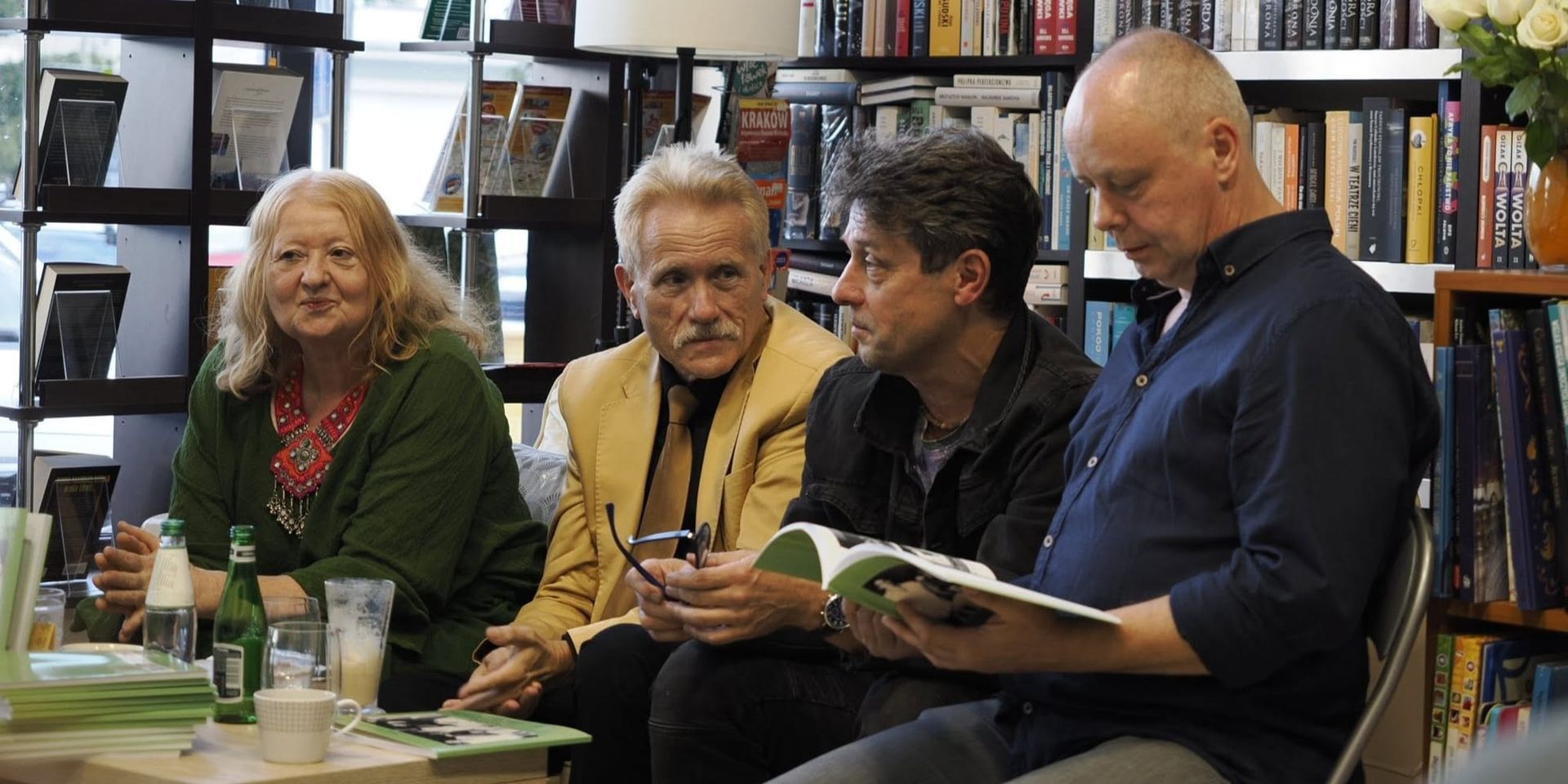
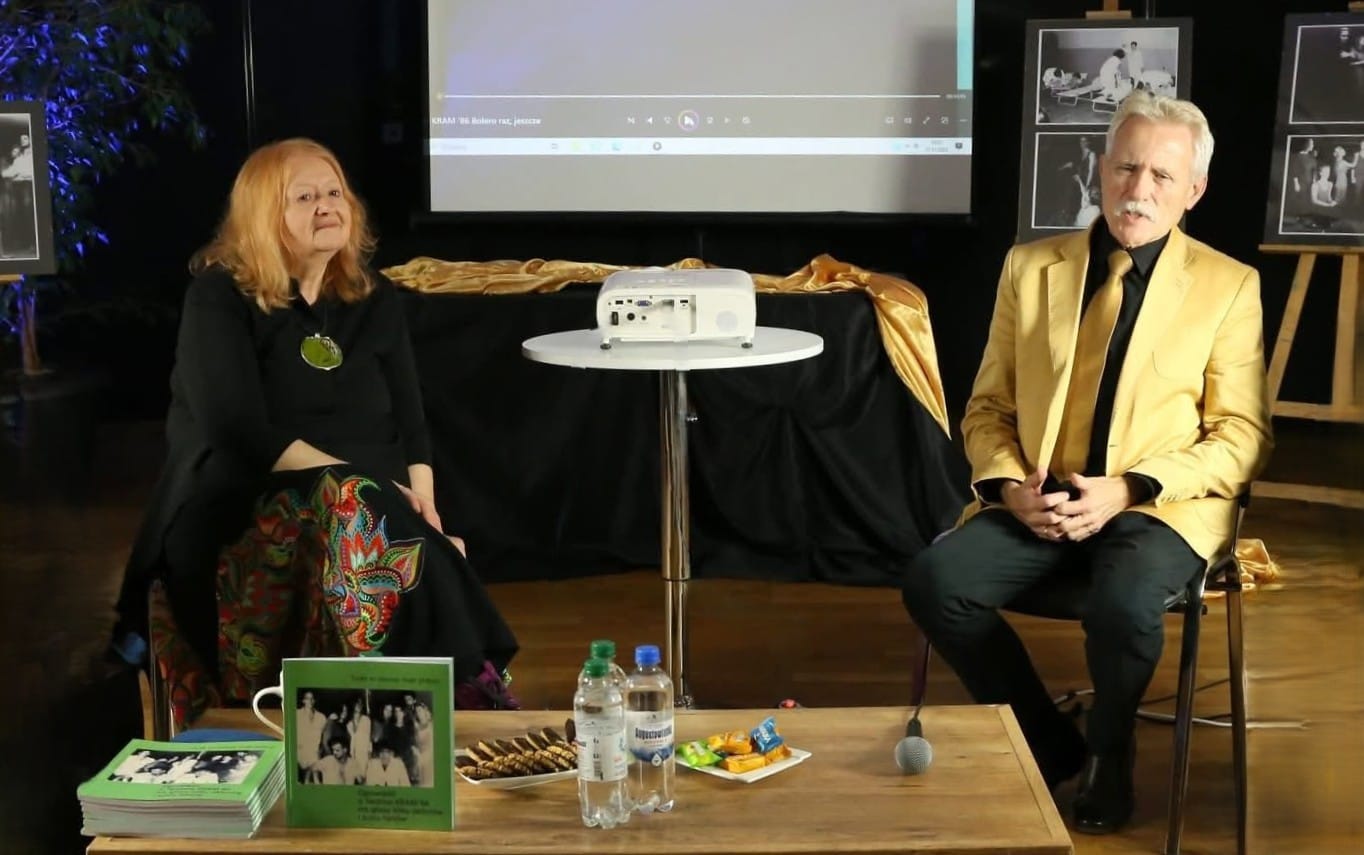
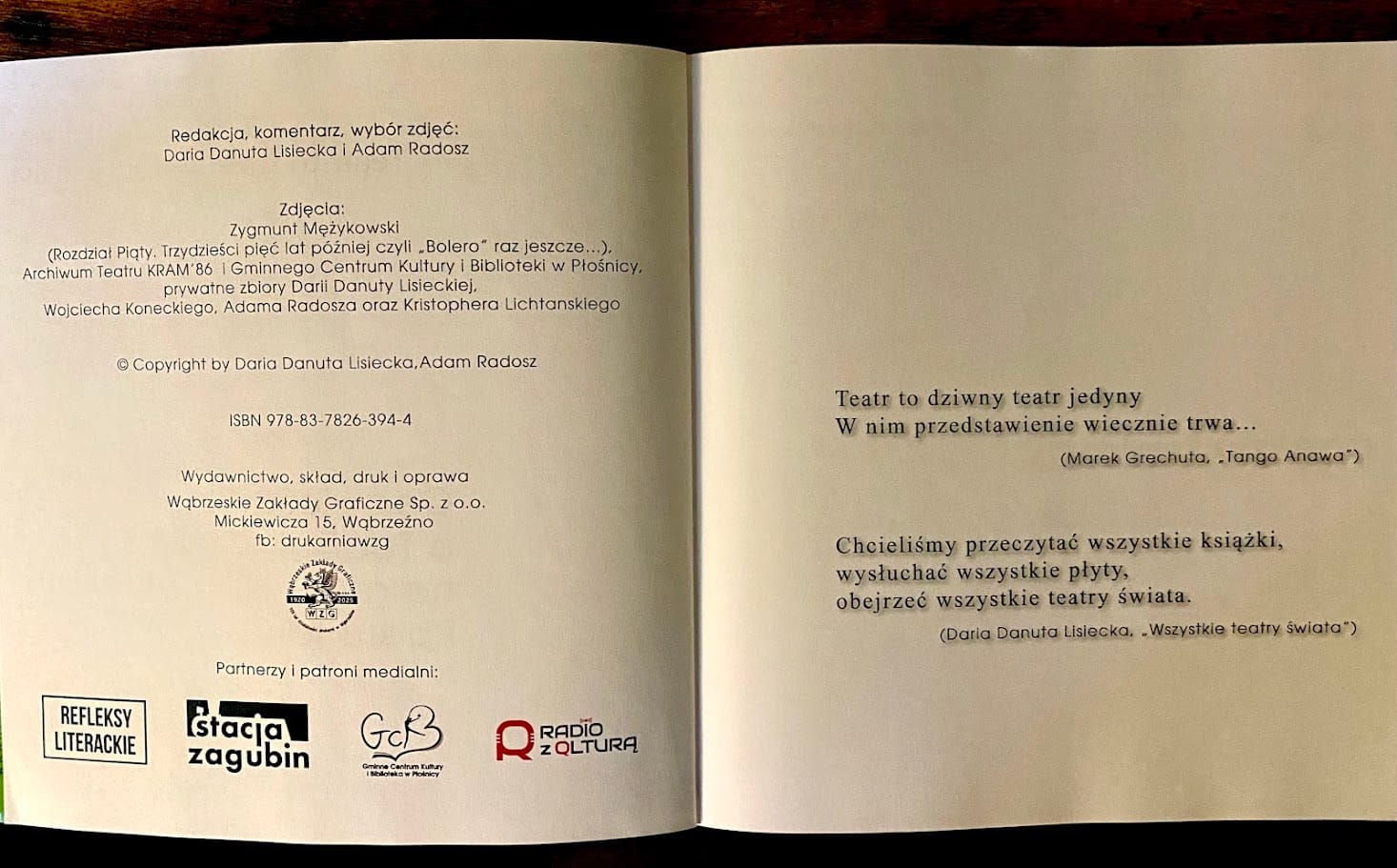
There could not be a more fitting Inaugural Guest for Theater Doppelganger than Daria Danuta Lisiecka and Adam Radosz, and their recent collaboration on the book project titled "Teatr to dziwny teatr jedyny. Opowieść o teatrze KRAM'86 na głosy kilku aktorów i paru fanów" | "Theater is a strange singular theater. The Story of KRAM'86 Theater in the Voices of a Few Actors and a Handful of Fans."
First - a necessary note about my title translation, which includes a poetic phrase from a Polish singer, songwriter, composer, and lyricist, Marek Grechuta (1945-2006): "Teatr to dziwny teatr jedyny," from the song Tango Anawa. The complexity here comes from the fact that this phrase (purposefully) omits the expected original punctuation, forcing the Polish mind to solve this linguistic dilemma and ultimately confronting the reader with multiple meanings simultaneously. Check out the details here:
Translator's dilemma: "Teatr to dziwny teatr jedyny."
The literal translation of the quote "Teatr to dziwny teatr jedyny" is "Theater is a strange theater, the only one," but it sounds a bit clunky in English prose. To make it sound a bit more authentic, compelling book title while preserving the poetic depth of Stachura's words, here are a few potential ways we can go about it, depending on the focus/vibe we want to strike.
Let's start with the multiple layers a Polish reader will immediately become aware of based on considering where and which punctuation mark is missing:
The Appositive (Two distinct descriptions)
Punctuation focus: "Teatr to dziwny, teatr jedyny." Here, the title steps forward, defines theater once, and then redefines it.
"Theater is a Peculiar Theater, a Singular One" "Theater: A Peculiar Theater, a Singular Theater"
- The Vibe: This sounds grand and slightly philosophical. It treats "peculiar" and "singular" as two separate crowns placed on the head of theater.
The Unified Flow (A single, multi-layered concept)
Punctuation focus: "Teatr: to dziwny teatr jedyny." This treats "strange-and-singular" as one single compound quality. It flows as one unbroken breath.
"Theater is a Peculiar, Singular Theater" | "Theater is a Singularly Peculiar Theater"
- The Vibe: The second option here ("Singularly Peculiar") is a bit of a translator's cheat, but a beautiful one. It flips "singular" into an adverb, meaning both "incredibly peculiar" and "uniquely peculiar." It loops the two Polish words into a tight, poetic knot.
The Independent Statement (Theater is strange; it stands alone)
Punctuation focus: "Teatr to dziwny teatr; jedyny" This splits the thought. Theater is weird... and it is the only thing that matters, or the only thing of its kind.
"Theater is a Peculiar Theater—The Only One" | "Theater is a Peculiar Theater: Singular"
- The Vibe: Dropping "Singular" at the very end after a colon or an em-dash gives it massive weight. It sounds like a final, absolute judgment.
And now: Rhythmic & Punchy
To tighten up the rhythm of the front half, removing the first "is" ("A Strange Theater...") makes it punch like a modern dramatic title while keeping the core meaning perfectly intact.
"A Strange Theater, the Only Theater"
And finally, what about "Theater of the Singular"?
"Theater is a peculiar theater of the singular" is a brilliant, heavy-hitting literary option. While it shifts the grammar slightly away from the exact literal Polish structure, it beautifully captures the spirit of Stachura. A "theater of the singular" sounds like a sanctuary for the individual, the misfit, or the unique soul—which fits the vibe of an ensemble theater group (KRAM86) and its dedicated fans perfectly.
Which option is your favorite? Be sure to comment, share your thoughts!
As I mentioned, I was part of the KRAM'86 theater group from its beginning in the summer of 1986 in Myślec nad Popradem until the summer of 1989. My own presence in Myślec nad Popradem during the Confrontations of the Youth Artistic Movement (KRAM) was connected with music and a singing group.
Yet, the atmosphere of KRAM—often even called the "Communist Woodstock" —was unique (formally, the event was held under the patronage of the Polish Socialist Youth Union (ZSMP), but in reality, it was regarded as an oasis of creative freedom, completely devoid of political pomposity).
Ultimately, KRAM was a nationwide festival and art camp organized periodically between 1974 and 1989 where young people trained in sections such as theater, music, jazz, rock, poetry, folklore, painting, and photography. From morning till night, there was one endless rehearsal somewhere going on under the watchful eye of masters such as:
- Rudolf Józefowski (folklore)
- Ryszard Sygitowicz, Krzysztof Herring, Elżbieta Zapędowska, Krystyna Prońko (music)
- Marek Karewicz (photography)
Among those who passed through KRAM over the years were Maryla Rodowicz, Jacek Fedorowicz, Andrzej Fedorowicz, Jan Marek Nowakowski, Wojciech Belon, Andrzej Zaucha, Andrzej Sikorowski and Grupa pod Budą, the AGH University ballet, Mieczysław Gil, Prof. Aleksander Krawczuk, Prof. Wiktor Boniecki, Jan Himilsbach, Marek Grechuta, and others.
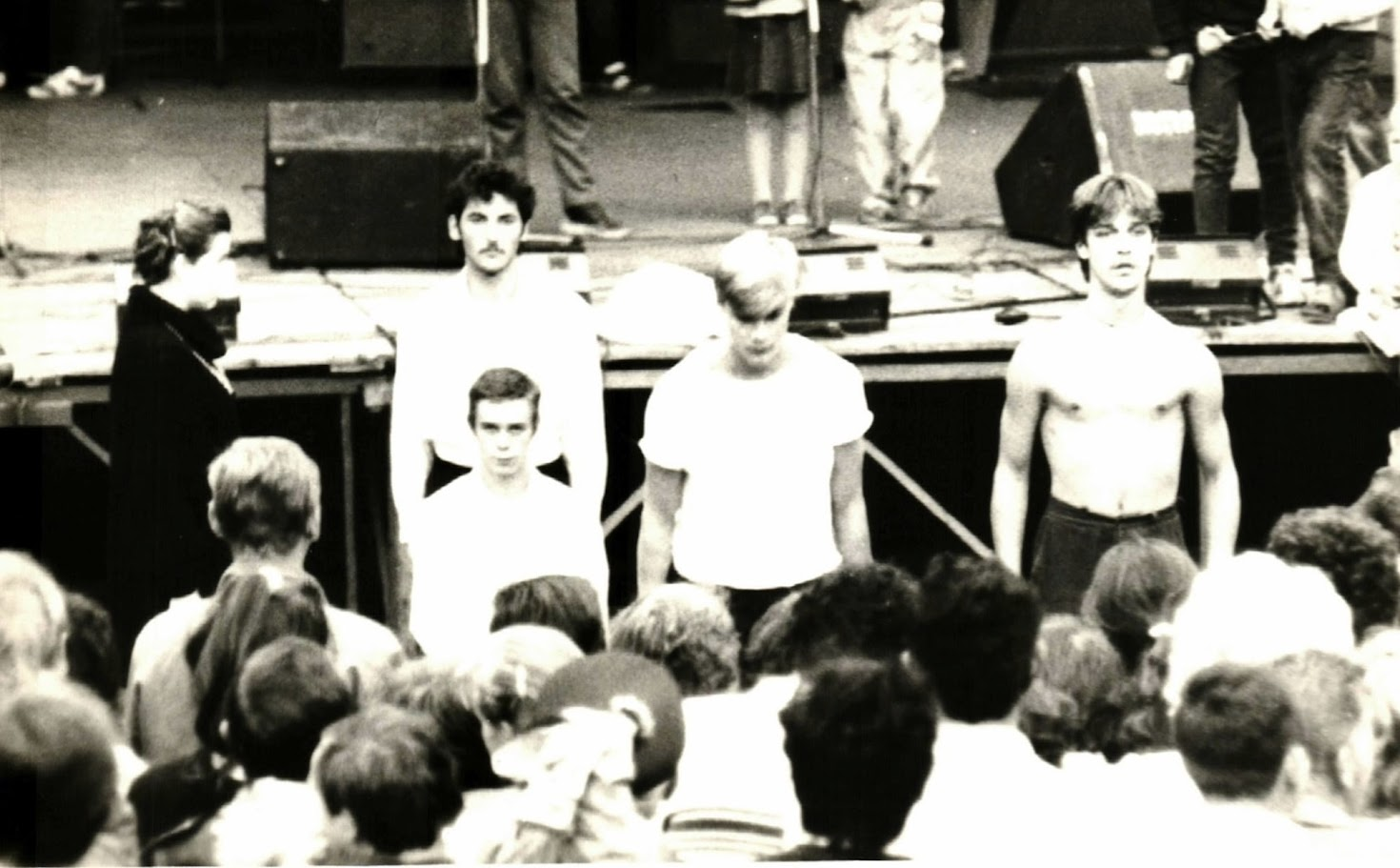
And it was right here, during the "Communist Woodstock" of 1986, that the All-Poland Theatre Kram'86 was born.
In the words of Daria Danuta Lisiecka:
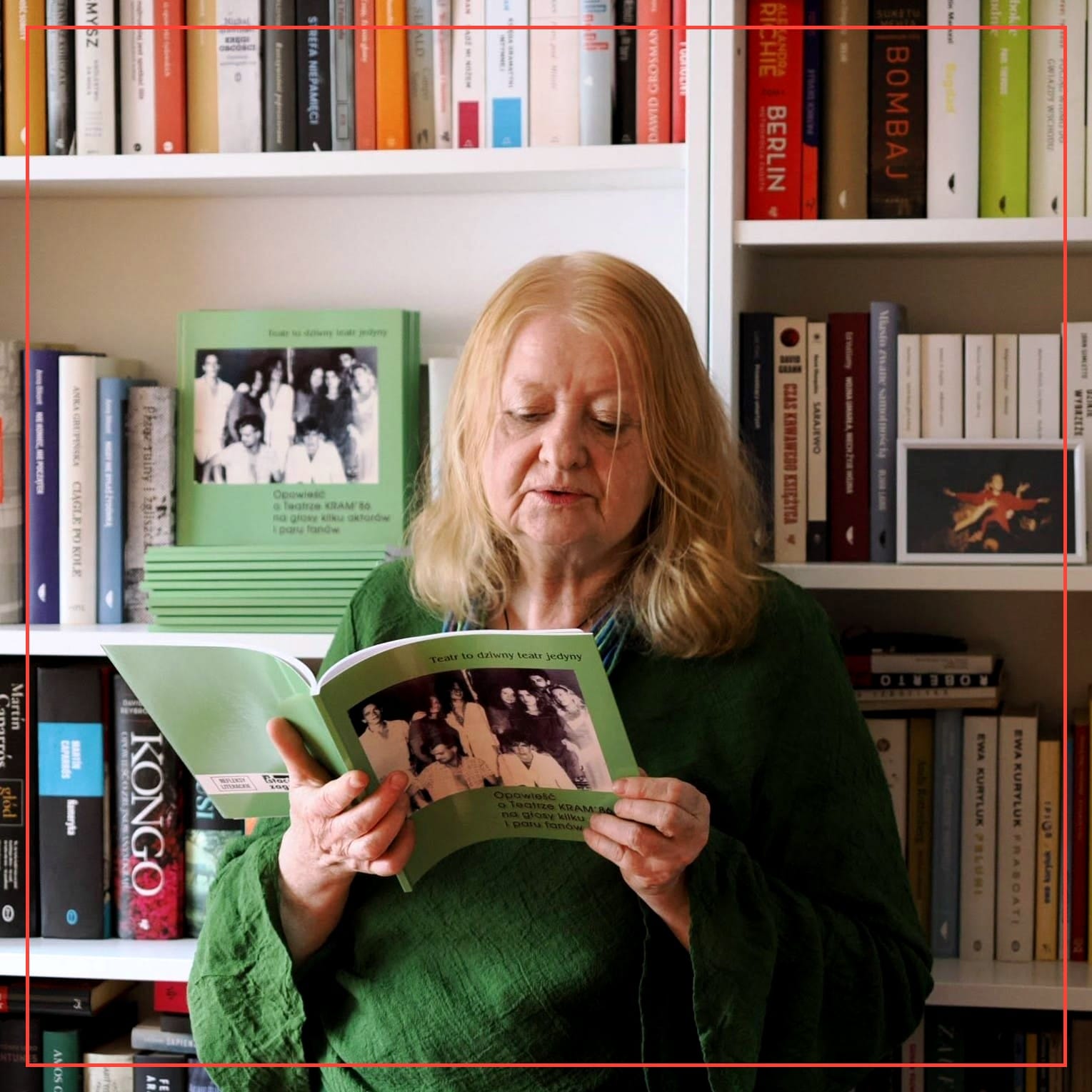
WHERE DID KRAM COME FROM?
OR A FEW WORDS OF INTRODUCTION TO THE STORY
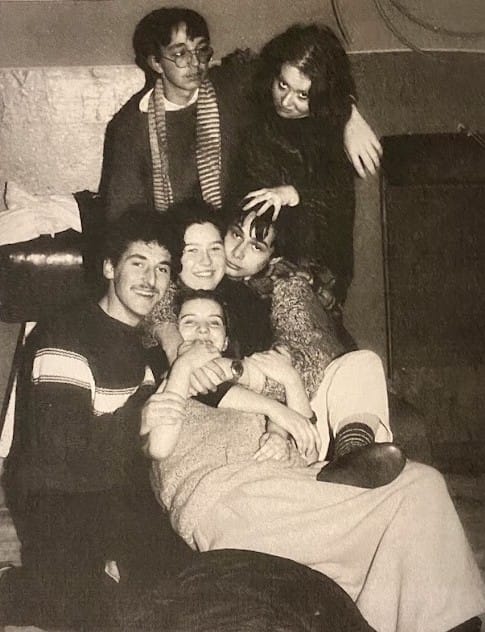
What we are trying to describe and capture here happened 39 years ago; it lasted for a short and intense time. For us, the participants of the activities and rehearsals, it carried meaning and weight. For some, it provided decent entertainment during a gray and difficult time; for others, it translated into their professional or private lives.
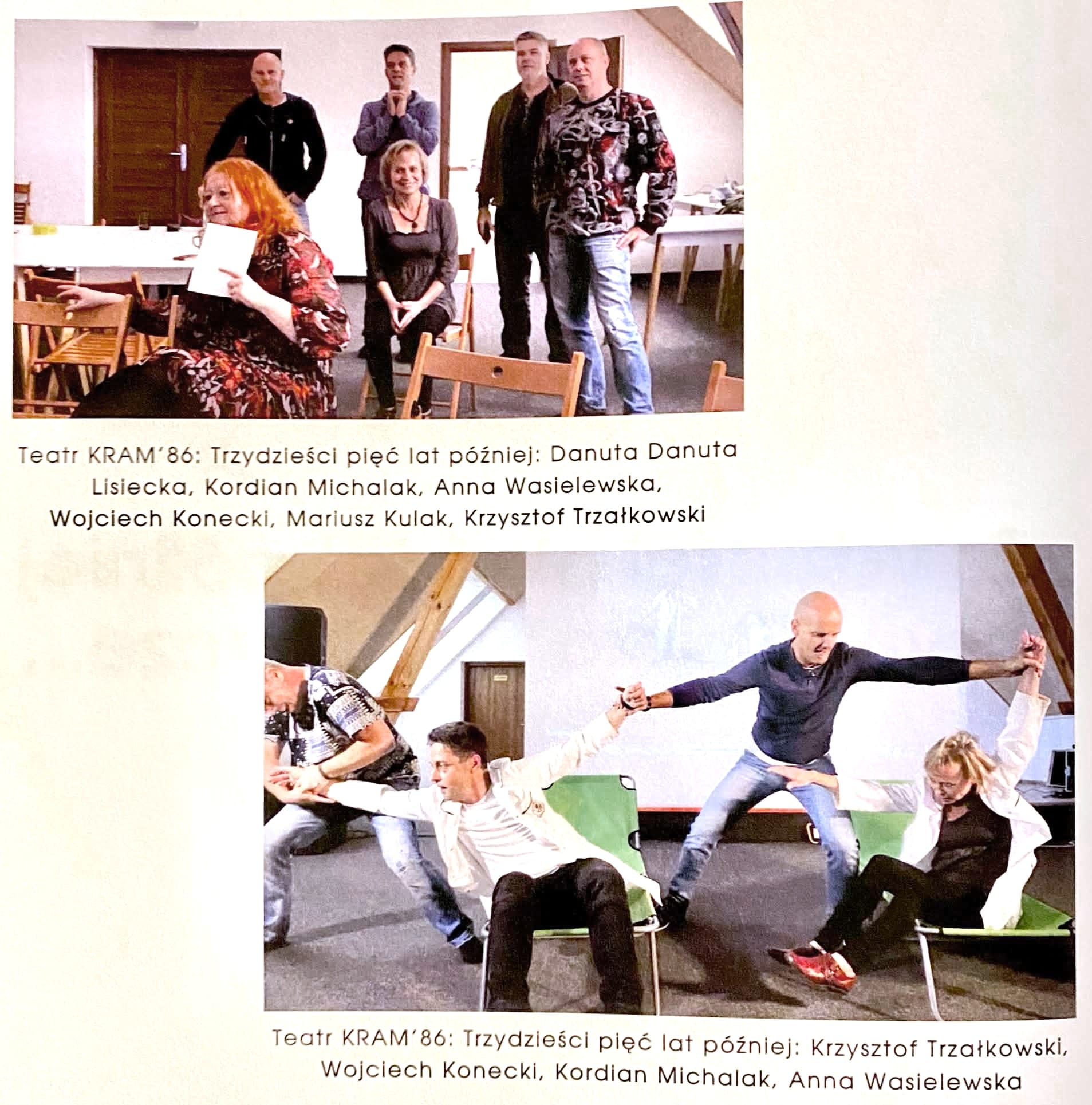
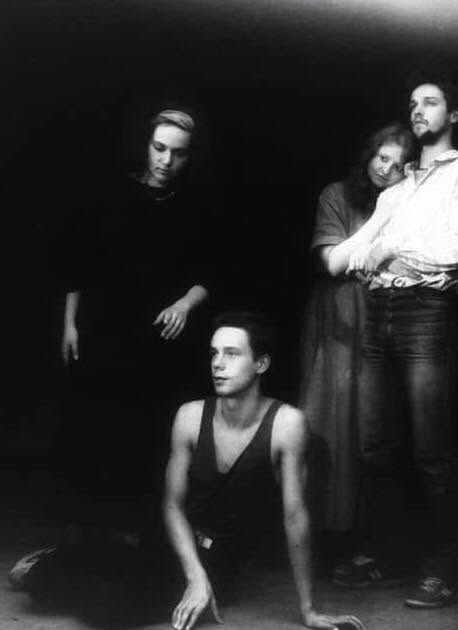
At that time, we were a phenomenon—a theater group of people of various ages, from different cities and towns, with diverse backgrounds and partially shared interests, meeting for monthly weekend workshop sessions at the Municipal Cultural Center in Płośnica. We worked intensely back then; sometimes, during those rehearsals that lasted days and nights, we managed to create a performance (the unforgettable, first fully independent "Bolero" in the autumn of 1986). More often, reaching a performance required a greater number of meetings (the complicated "Journey into the Interior" in 1988, born in pain and, over time, euphoria).
From the very beginning, our theater aligned in practice with the principles of poor theater; moreover, we were fascinated by Grotowski, and we weren't interested in extensive set designs and decorations. We were a theater of movement, though not pantomime. A stage image achieved through natural movement, minimalist and symbolic elements of set design, enigmatic costumes that we created for ourselves, sophisticated music (the whole group listened to a wide variety of music and knew how to find remarkable phenomena in this field), and working with the method of collective creation—these were our distinguishing marks.
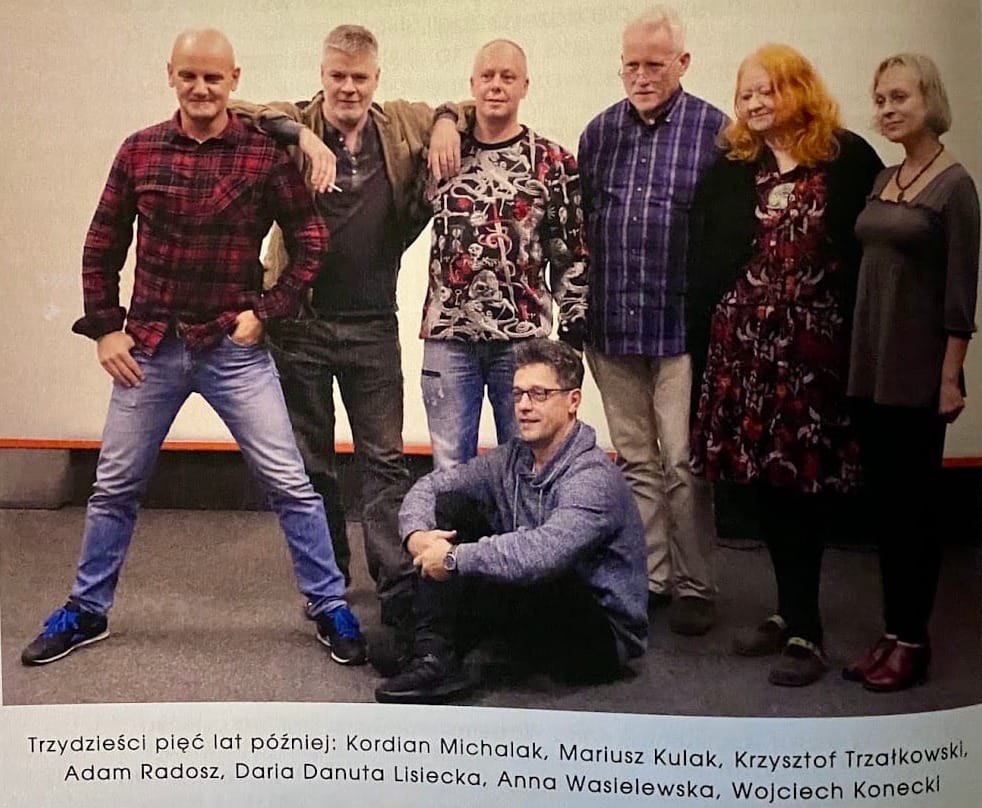
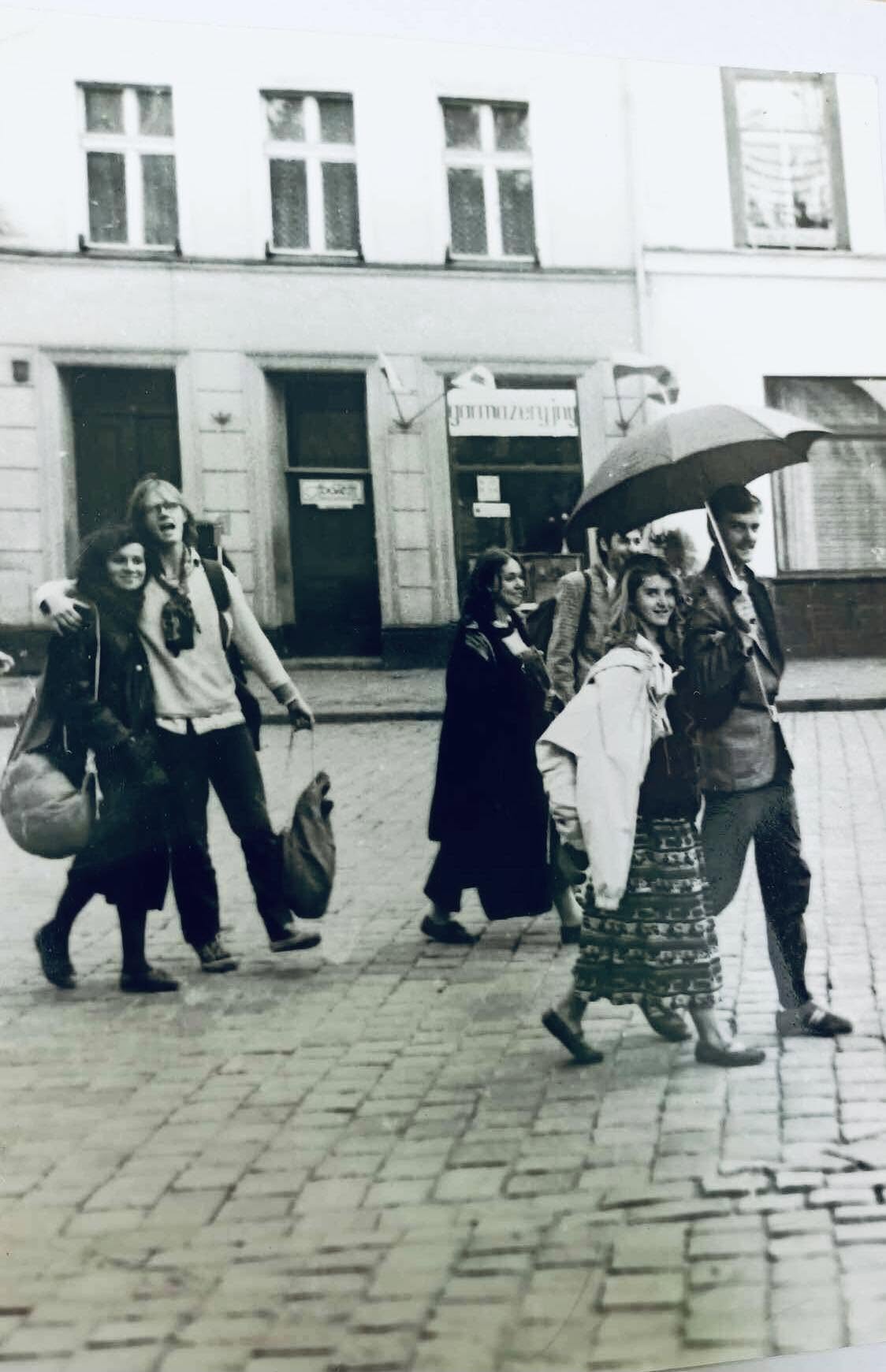
Adam Radosz, in turn, reflects in one piece on our journeys and travels.
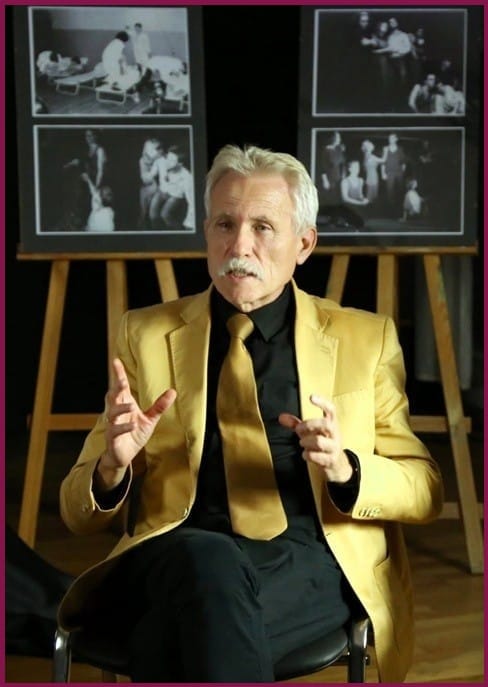
ABOUT OUR JOURNEYS
Barbórka Theater Meetings 1987
Our successes at various festivals bore fruit in the highest distinction. Both theaters, Plastyczny and KRAM’86, were invited to participate in the biggest and most prestigious paraprofessional / amateur theater group event at that time—the Barbórka Theater Meetings.
Hundreds, if not thousands, of observers converged on the Palace of Culture of Zagłębie in Dąbrowa Górnicza for it. Performances were repeated several times so that all audience members could see them. In the corridors, fierce, long discussions took place among emotional viewers from all over Poland.
The trip to Dąbrowa Górnicza took place by bus from PKS Działdowo. The H-9 bus was almost brand new, but when we loaded the seating scaffolding for Teatr Plastyczny from Lidzbark for the performance "Beyond Existence," it became so heavy that we had to stop by the depot in Działdowo to exchange the tires for brand new ones, because of the fear that we wouldn't make it. This caused a delay, and at all costs, we wanted to make it in time for an extraordinary event—the evening concert of Ewa Demarczyk. We made it just in the nick of time. The driver, who at first was driving quite slowly, stepped up his efforts and stepped on the gas after seeing our determination to participate in the competition, so that we would arrive on time. The extraordinary atmosphere of that event has stayed in our memories forever. "Palma sola", "Skrzypek Hercowicz" (Hercowicz the Fiddler), "Karuzela z Madonnami" (Carousel with Madonnas - this English-language rendition is by group Faun Fables), "Rebeka"—a dark stage, Demarczyk - the Black Lady of Polish Song - dressed in black, an extraordinary tension, a silence full of drama. We were accompanied by the director of MGOK from Lidzbark, Janina Truszkowska-Bomba, a person immensely devoted to us, always supportive, with a wonderful sense of humor, a great friend of our theaters.
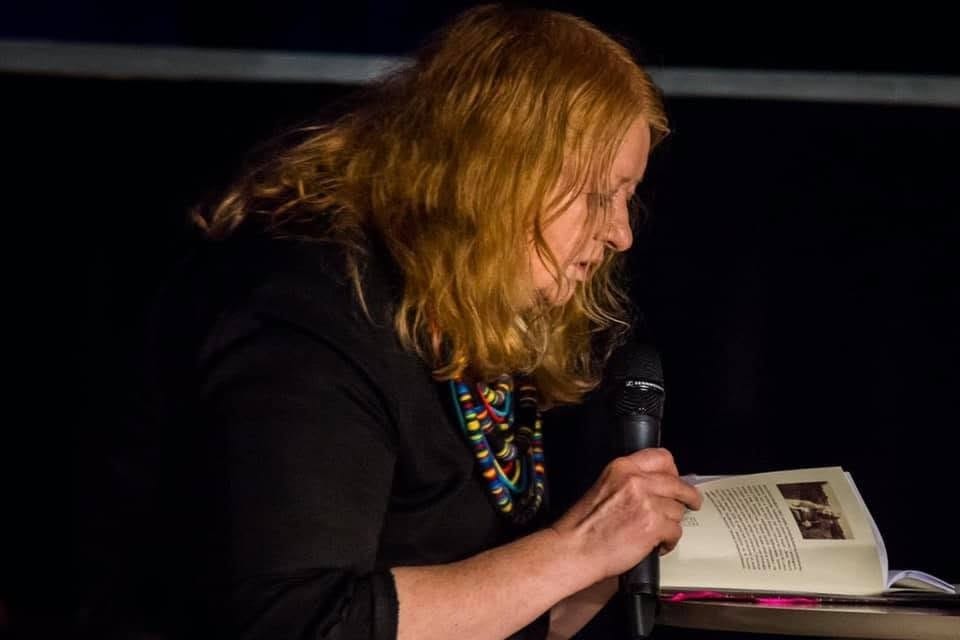
And here is my actual contribution to this wonderful retrospective put together by Daria Danuta Lisiecka and Adam Radosz:
TEATR KRAM’86 WAS A JOURNEY FOR ME...
by Kristopher Lichtanski
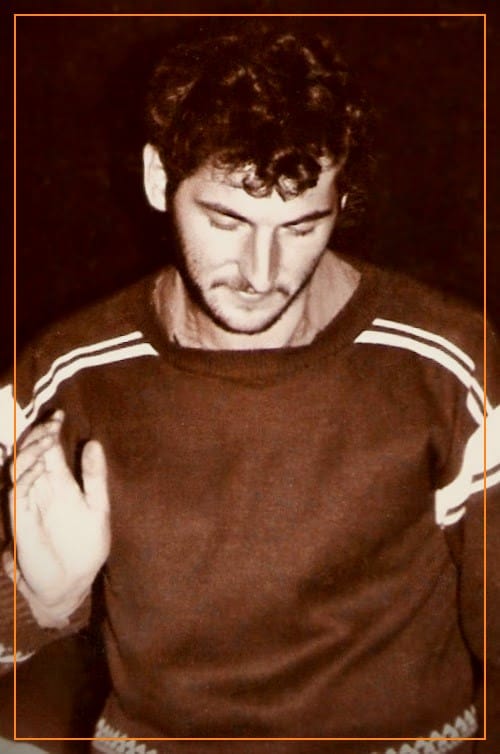
For me, Teatr KRAM’86 was a journey, a train-of-desire, love, longing, escape, insatiability, and supersaturation. It taught me about myself. KRAM was a confrontation of my/our dreams and hopes in a world that promised so much yet gave so little. I was drawn to it by the (im)possibility of existing outside of time and place, beyond the physical concreteness of the world, beyond the cruelty of everyday life (back then), beyond the conclusion of spoken words, sentences, and conversations.
KRAM’86 was an endless idea, a concept, a value. Our host was Adam Radosz. His patience, tenderness, was the breath, the rhythm of our activities. It is thanks to him that nothing we did ever went to waste. Thanks to him, every moment was filled with value and possibility... each of us possessed value and possibility. His letters and telegrams were signposts: this place, that time, for such and such performance. And indeed, when the time came, there he was, each and every time, waiting for each of us. With KRAM, I always felt expected, no matter what— a very precious, beautiful feeling!
I remember it so well.. the drifting smoke of cigarettes and poems, the taste of coffee and sweat... the smell of milk bars [diners] and railway stations, of borrowed sweaters and books... the bustle of greetings and goodbyes... the whisper of secrets, the colors of glances, the rattle of laughter, the rhythm of walks... In those KRAM-style wanderings and escapades, I shaped myself for the future. In those KRAM-style theatrical activities, I managed to express the mess of my desires and the insufficiency of being. Fully in love with eccentricity, I learned there to take responsibility for it (and for myself).
KRAM’86 allowed for the de-intimization of what is personal, thereby creating a space we could share with each other, with our audience, and with those who joined us for a moment, so that with just a handful of breaths we could exist for a short moment outside of the boundaries of typical patterns or conventions. I cannot imagine my world without these people, without these experiences, and without these memories.
More from the performers and fans:
- It was the most beautiful period of my life and of my theatrical adventures. It taught me a great deal. And I am grateful to everyone who participated in this project and this venture. Adam Radosz
- Our Theater—it would be a good place for a psychologist to conduct research. Rafał said, after one of the gatherings, that now he would have something to think about for a month again. These words probably best reflect the whole matter, because those days were always truly very crazy and so detached; strange things were done at times. Krzysztof Trzałkowski
- Wonderful friendships, first loves—those fulfilled and reciprocated, and those not at all, crazy journeys, sleepless nights spent talking, pure and true joy from being together, from interacting with each other, with the world of theater, but also with poetry, music, images... Everything was remarkably intense, dense with meanings and pulsating emotions. The most diverse kinds. It also seemed that for us, nothing was impossible. And in fact, there wasn't. Kordian Michalak
- We often improvised. The few rehearsals took place right before the performance or in the aforementioned Płośnica, which became our permanent base because it also contained the word "axis" (oś) in its name. The atmosphere of the meetings was usually euphoric, because we missed each other and were eager for one another. We slept on the floors, listened to the Floyds, and discussed Ibero-American prose and Dygat. Interestingly, I don't think we abused substances, or at least I don't remember doing so... Wojciech Konecki
- I remember so well the drifting smoke of cigarettes and poems, the taste of coffee and sweat, the smell of milk bars and railway stations, of borrowed sweaters and books, the bustle of greetings and goodbyes. The whisper of secrets, the colors of glances, the rattle of laughter, the rhythm of walks... Kristopher Lichtanski
- Well, it was a pity back then on Sunday when we parted ways. Almost everyone left for their respective homes; it was so sad for me... "When will we see each other?"—I thought. Because these were exceptional, wonderful people... Andrzej Rochon
- I heard from Daria that I was the most important fan. That is probably the greatest distinction that has ever happened to me, the most beautiful words. I wanted to thank you, KRAM MEMBERS, for changing my outlook on the world through what you did. Tomasz Bońkowski
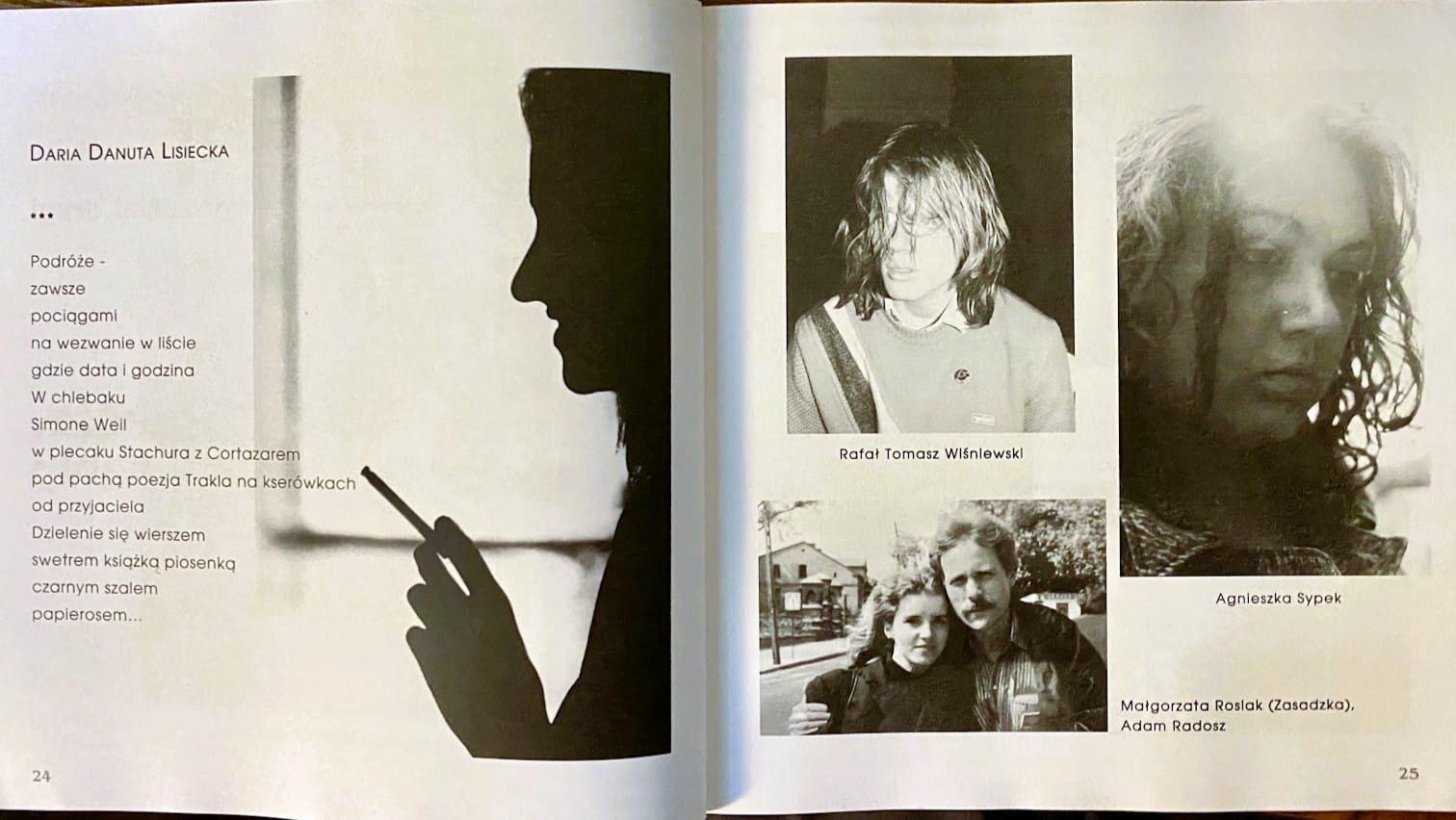
All Photos © D.D. Lisiecka [used with permission]
Written by
Subscribe for FREE to our Audience
Enter your email to access commenting, receive memos, logs, dispatches, and unfiltered fragments directly from the Theater.






Member discussion